
INSTITUTE FOR STANDARD AND QUALITY DEVELOPMENT STUDIES


Wood-based panel, also known as engineered wood or industrial wood, is called Wood-Based Panel in English. It is a type of wood board made by combining wood particles with adhesives or chemicals to form panels. The advantages of this type of board include a flat surface without warping, resistance to termites, lower cost, easy installation, and faster processing time.
Wood-based panel, also known as engineered wood or industrial wood, is called Wood-Based Panel in English. It is a type of wood board made by combining wood particles with adhesives or chemicals to form panels. The advantages of this type of board include a flat surface without warping, resistance to termites, lower cost, easy installation, and faster processing time.
On June 30, 2023, Deputy Minister Nguyễn Văn Sinh signed Circular No. 04/2023/TT-BXD promulgating QCVN 16:2023/BXD. This regulation officially came into effect on January 1, 2024 and replaced QCVN 16:2019/BXD. According to the 2023 version, wood-based panels belong to the group of decorative and finishing building materials that must be certified and declared in conformity before being circulated on the market.

The regulation specifies technical requirements for three wood-based panel products, including:
According to QCVN 16:2023/BXD, the above two types of boards must meet the following four technical indicators:
The benefits for enterprises obtaining conformity certification for wood-based panels in accordance with QCVN 16:2023/BXD include:
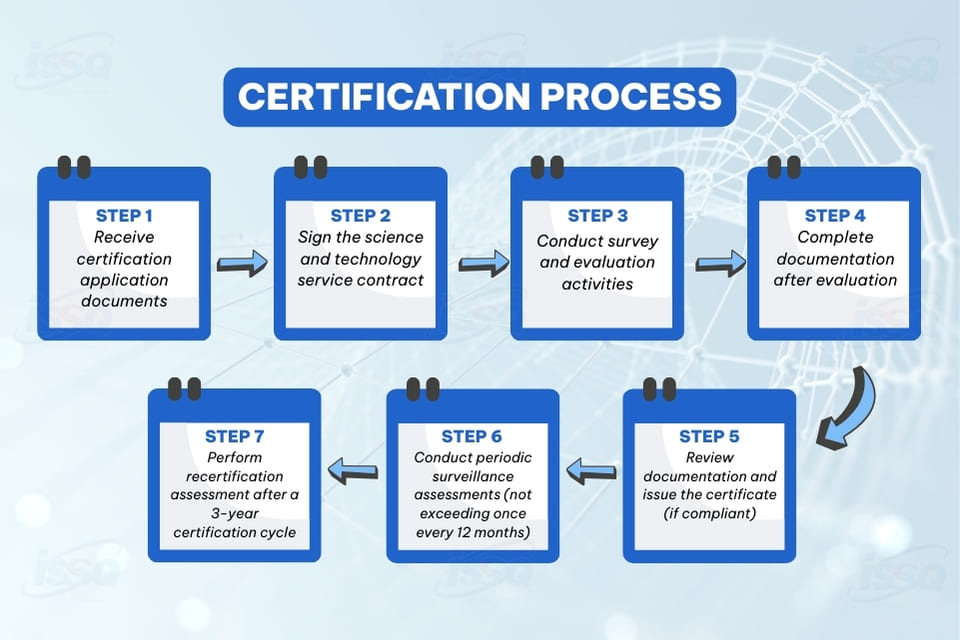
As one of the first three organizations designated by the Ministry of Construction with certification capability, and with a team of experienced experts, ISSQ Quality Institute has certified many organizations and companies across all three regions of Vietnam. The conformity certification process for wood-based panels in particular and other standard and conformity-certified products in general includes the following basic steps:
Step 1: Receive certification registration documents
Step 2: Sign a science and technology service contract
Step 3: Conduct on-site surveys and assessments at the enterprise
Step 4: Complete documents after assessment
Step 5: Review documents and issue certification (if qualified)
Step 6: Conduct surveillance assessment no more than once every 12 months
Step 7: Conduct recertification assessment (certificate expires after 3 years)
After the enterprise completes the dossier and receives the Certificate of Conformity for Wood-Based Panels in accordance with QCVN 16:2023/BXD, the organization must declare conformity at the Department of Construction or the competent state authority where the business is registered in accordance with Circular No. 28/2012/TT-BKHCN and Circular No. 02/2017/TT-BKHCN.
The basic dossier includes: (during the appraisal process, additional documents may be required by the competent authority)
ISSQ Quality Institute is always ready to accompany companies during the period of integration and development.
Please contact hotline: +84 981851111 or email vienchatluong@issq.org.vn | tcvn@issq.org.vn. We are honored to serve our valued customers!
Publication Date: February 5, 2024


