
INSTITUTE FOR STANDARD AND QUALITY DEVELOPMENT STUDIES


Paint is a material widely used in construction projects, residential buildings, schools, hospitals, and many other applications. Certification of conformity for lead content in paints in accordance with QCVN 8:2020/BCT not only helps businesses comply with legal requirements but also provides numerous benefits to stakeholders, including manufacturers, distributors, consumers, and regulatory authorities.
Paint is widely used in construction works, residential buildings, schools, hospitals, and many other applications. In addition to requirements relating to durability and aesthetics, controlling lead content in paint has become increasingly important in order to protect users' health and comply with product quality management regulations.
For enterprises engaged in the manufacturing, importation, and trading of paint products, certification of conformity in accordance with QCVN 8:2020/BCT is not only a regulatory compliance requirement but also contributes to enhancing credibility and competitiveness in the marketplace.
Join ISSQ Institute of Quality to learn about the regulations on lead content limits in paints, the list of products within the scope of application, and the benefits of conformity certification under QCVN 8:2020/BCT in the article below.
Lead content in paint refers to the percentage by mass of lead, calculated as metallic lead (Pb), present in a paint product. This content includes the total amount of lead contained in paint in all forms, ranging from pure lead to lead compounds used during the manufacturing process.
According to QCVN 8:2020/BCT, lead content in paint is determined through testing methods specified in the regulation to assess the product’s compliance with current technical requirements.
Controlling lead content in paint plays an important role in ensuring user safety, minimizing negative impacts on health and the environment, and helping enterprises meet product quality requirements before placing products on the market.
Lead is a highly toxic heavy metal. When the lead content in paint exceeds the permissible limit, the product may cause adverse effects on human health, the environment, and business operations.
During application, use, or when paint coatings deteriorate and peel off, lead-containing dust particles and paint fragments may be released into the environment. Long-term inhalation or accidental ingestion of these particles can increase the risk of lead accumulation in the body.
Exposure to high concentrations of lead or prolonged exposure may affect the nervous system, circulatory system, kidneys, and various other organs. Children are particularly vulnerable because their bodies are still developing.
Paint containing lead levels above the permitted threshold may become a source of pollution during manufacturing, construction, renovation, or demolition activities. Lead can persist in the environment for extended periods, negatively affecting soil quality, water resources, and surrounding ecosystems.
Manufacturing, importing, or distributing paint products that fail to meet lead content requirements may expose businesses to legal sanctions under applicable regulations. In addition to administrative penalties, enterprises may also face reputational damage, loss of customer trust, and reduced competitiveness.
These impacts demonstrate that controlling lead content in paint is not only a technical requirement but also an important factor in protecting public health, preserving the environment, and supporting sustainable business development. Therefore, QCVN 8:2020/BCT was issued to establish lead content limits in paints and serve as the basis for conformity assessment before products are circulated on the market.

QCVN 8:2020/BCT is the National Technical Regulation specifying limits for lead content in paints manufactured, imported, and traded in Vietnam. The regulation establishes technical requirements, testing methods, and management provisions for controlling lead content in paint products, thereby contributing to the protection of human health and the environment.
QCVN 8:2020/BCT applies to paint products listed in Appendix A of the regulation. It serves as the basis for state management authorities, certification bodies, and enterprises to carry out conformity assessment activities before paint products are placed on the market.
The regulation applies to organizations and individuals involved in the manufacturing, importation, and trading of paint products within its scope, as well as state management agencies and other organizations and individuals engaged in the management, assessment, and use of paint products.
According to QCVN 8:2020/BCT, certain paint products within the scope of the regulation must comply with lead content limits and undergo conformity assessment before being circulated on the market. The following categories of paints are subject to the regulation:
Paint products listed above, when manufactured, imported, or traded in Vietnam, must comply with lead content limit requirements stipulated in QCVN 8:2020/BCT. This also serves as the basis for enterprises to conduct conformity assessment and obtain conformity certification in accordance with current regulations.

Certification of conformity for lead content in paints in accordance with QCVN 8:2020/BCT not only helps businesses comply with legal requirements but also brings numerous benefits to stakeholders, including manufacturers, distributors, consumers, and regulatory authorities.
Certification of conformity for lead content in paints under QCVN 8:2020/BCT not only enables businesses to satisfy legal requirements but also contributes to protecting consumer health, improving product quality, and promoting the sustainable development of the paint industry.

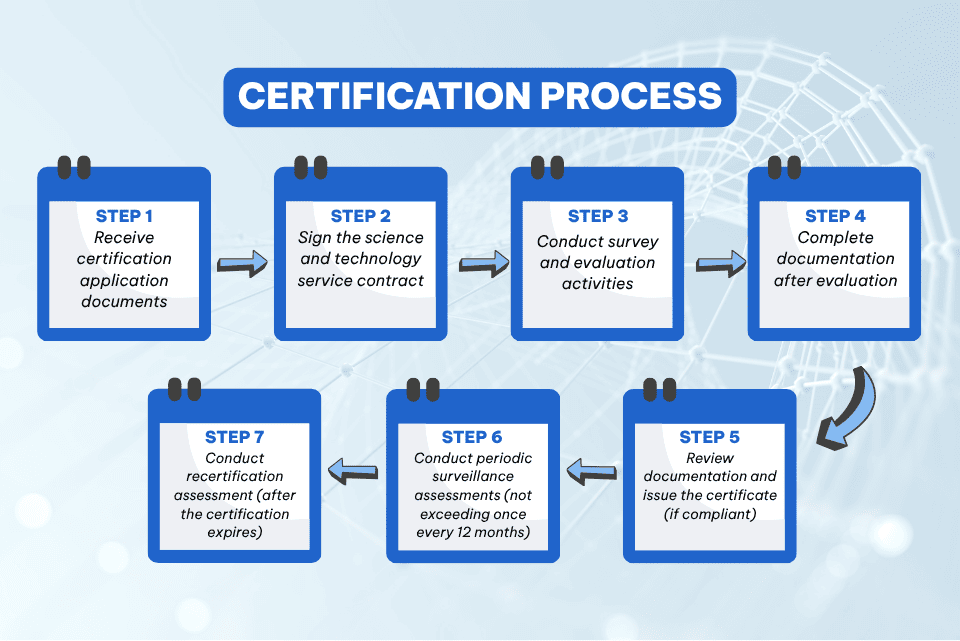
To certify that paint products comply with lead content limit requirements under QCVN 8:2020/BCT, enterprises must undergo conformity assessment and certification according to the following basic steps:
Step 1: Receive and review the certification application dossier
Step 2: Sign a scientific and technological service contract
Step 3: Conduct surveys, inspections, and assessments
Step 4: Complete post-assessment documentation
Step 5: Review the dossier and issue the certificate of conformity (if compliant)
Step 6: Conduct surveillance assessments at intervals not exceeding 12 months
Step 7: Conduct recertification assessment after certificate expiry
Companies requiring conformity assessment and certification for lead content limits in paints under QCVN 8 are invited to contact ISSQ Institute of Quality via hotline: (+84) 981 851 111 or email: vienchatluong@issq.org.vn | tcvn@issq.org.vn for guidance and support with certification procedures.
Published Date: June 08, 2026


