
INSTITUTE FOR STANDARD AND QUALITY DEVELOPMENT STUDIES


Under the regulations, QCVN 16:2023/BXD specifies the technical limits and management requirements for building material products and goods within the scope of this standard. The scope of management covers products manufactured domestically, imported, traded, distributed in the market, and used in construction projects in Vietnam.
QCVN 16:2023/BXD is the National Technical Regulation on Building Material Products and Goods.
This regulation was issued by the Ministry of Construction together with Circular No. 04/2023/TT-BXD dated June 30, 2023.
Under the regulations, QCVN 16:2023/BXD specifies the technical limits and management requirements for building material products and goods within its scope. The regulatory scope covers products manufactured domestically, imported, traded, distributed in the market, and used in construction works in Vietnam.
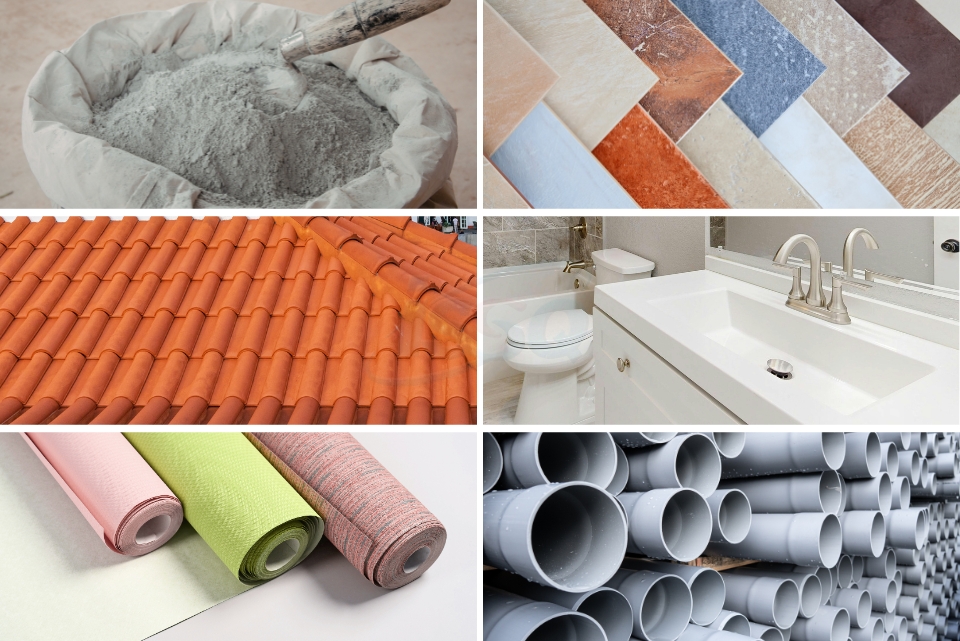
QCVN 16:2023/BXD came into effect on January 1, 2024, replacing QCVN 16:2019/BXD. For products falling within its scope and subject to mandatory requirements, enterprises must fulfill their quality management obligations in accordance with applicable laws.
Therefore, enterprises manufacturing, importing, or trading building materials must accurately determine:
Whether their products fall under the regulatory scope;
Which technical regulation applies to the product;
Applicable technical standards;
The risk level of the product;
Whether the product is subject to mandatory conformity certification;
The conformity assessment scheme;
Required technical documentation to be prepared;
Labeling requirements;
Traceability requirements;
Conformity declaration obligations prior to market distribution.
For building material manufacturers, QCVN 16:2023/BXD serves as a critical basis for product quality control prior to market release. Meeting technical requirements is not only a legal necessity but also helps enterprises to:
First, control product quality: Enterprises must strictly control technical parameters corresponding to each product type.
Second, enhance customer trust: Contractors, project developers, design consultants, and consumers have a reliable framework to evaluate product quality.
Third, mitigate operational and market risks: Proper documentation, testing, certification, and conformity declaration minimize the risk of quality disputes during distribution.
Fourth, boost market competitiveness: In the building materials sector, companies with robust quality control systems easily meet the stringent requirements of large-scale projects.
Fifth, strengthen traceability: Technical records and quality management systems allow businesses to effectively monitor raw materials, manufacturing processes, and finished goods.
The scope of regulated building materials is extensive. Product categories encompass a wide variety of materials ranging from primary construction materials, standard building materials, metallic materials, to wood-based, polymer, recycled materials, and industrial by-products. According to the updated classification under Circular 41/2026/TT-BXD, the primary product groups include:
No. | Category of Building Material Products and Goods |
1 | PRIMARY BUILDING MATERIALS |
1.1 | Cement and cement clinker |
1.1.1 | Cement clinker |
1.1.2 | Cement |
1.1.2.1 | Portland cement |
1.1.2.2 | Blended Portland cement |
1.1.2.3 | Sulfate-resistant Portland cement |
1.1.2.4 | Aluminate cement |
1.1.2.5 | Portland blast-furnace slag cement |
1.1.2.6 | White Portland cement |
1.1.2.7 | Low-heat Portland cement |
1.1.2.8 | Well cement |
1.1.2.9 | Composite cement |
1.1.2.10 | Other special cements |
1.1.3 | Natural mineral additives for cement |
1.2 | Ceramic tiles |
1.2.1 | Ceramic tiles |
1.2.2 | Granite tiles |
1.2.3 | Cotto tiles |
1.2.4 | Acid-resistant tiles |
1.2.5 | Other ceramic tiles |
1.3 | Dimension stones |
1.3.1 | Natural dimension stones |
1.3.2 | Artificial dimension stones |
1.4 | Sanitaryware |
1.4.1 | Washbasins (including sinks) |
1.4.2 | Wall-hung urinals |
1.4.3 | Bidets |
1.4.4 | Water closets (pedestal toilets) |
1.4.5 | Other sanitaryware |
1.5 | Building glass |
1.5.1 | Float glass |
1.5.2 | Flat building glass produced by horizontal or vertical drawing process |
1.5.3 | Figured rolled glass |
1.5.4 | Thermally toughened safety glass |
1.5.5 | Laminated glass and laminated safety glass |
1.5.6 | Low-Emissivity glass (Low-E glass) |
1.5.7 | Reflective coated glass |
1.5.8 | Sealed insulating glass units |
1.5.9 | Mirrors |
1.5.10 | Tinted glass |
1.5.11 | Heat-absorbing tinted glass |
1.5.12 | Electrochromic / Smart glass |
1.5.13 | Photovoltaic integrated glass |
1.5.14 | Wired glass |
1.5.15 | Glass blocks |
1.5.16 | Other types of building glass |
1.6 | Industrial lime |
1.6.1 | Quicklime (lump lime) |
1.6.2 | Hydrated lime |
1.6.3 | Precipitated calcium carbonate (PCC) |
1.6.4 | Other industrial limes |
1.7 | Refractory materials |
1.7.1 | Shaped refractories |
1.7.1.1 | Fireclay bricks (chamotte bricks) |
1.7.1.2 | High-alumina bricks |
1.7.1.3 | Silica bricks (dinas bricks) |
1.7.1.4 | Alumina-carbon bricks |
1.7.1.5 | Magnesia bricks |
1.7.1.6 | Magnesia-spinel bricks |
1.7.1.7 | Magnesia-carbon bricks |
1.7.1.8 | Chrome-magnesia bricks |
1.7.1.9 | Silicon carbide bricks |
1.7.1.10 | Other refractory bricks |
1.7.2 | Unshaped refractories |
1.7.2.1 | Refractory castables / concrete |
1.7.2.2 | Refractory mortar |
1.7.2.3 | Refractory fibers and wool |
1.7.3 | Other refractory materials |
2 | CONVENTIONAL BUILDING MATERIALS |
2.1 | Building stone |
2.1.1 | Crushed stone from natural rock used as aggregate for concrete |
2.1.2 | Natural pebbles and gravel used as aggregate for concrete |
2.1.3 | Other building stones |
2.2 | Construction sand |
2.2.1 | Natural sand used as aggregate for concrete and masonry/plastering mortar |
2.2.2 | Manufactured sand used as aggregate for concrete and masonry/plastering mortar |
2.2.3 | Other construction sands |
2.3 | Masonry units (wall materials) |
2.3.1 | Fired clay bricks |
2.3.1.1 | Fired clay hollow bricks |
2.3.1.2 | Fired clay solid bricks |
2.3.2 | Non-fired masonry units |
2.3.2.1 | Concrete bricks / blocks |
2.3.2.2 | Autoclaved aerated concrete (AAC) products |
2.3.2.2.1 | Autoclaved aerated concrete (AAC) blocks |
2.3.2.2.2 | Reinforced autoclaved aerated concrete (AAC) wall panels |
2.3.2.3 | Lightweight concrete bricks, lightweight concrete panels (foam concrete, non-autoclaved aerated concrete, lightweight aggregate concrete) and other lightweight materials |
2.3.2.4 | Geopolymer concrete bricks |
2.3.2.5 | Extruded precast concrete hollow core wall panels |
2.3.2.6 | Lightweight 3-layer sandwich wall panels |
2.3.2.7 | Non-fired earth bricks |
2.3.3 | Other masonry materials |
2.4 | Tiling materials |
2.4.1 | Cement paving and wall tiles |
2.4.2 | Fired clay paving and wall tiles |
2.4.3 | Other tiling materials |
2.5 | Roofing materials |
2.5.1 | Roofing tiles |
2.5.1.1 | Fired clay roofing tiles |
2.5.1.2 | Glazed ceramic roofing tiles |
2.5.1.3 | Concrete roofing tiles (including fiber-concrete tiles) |
2.5.2 | Roofing sheets |
2.5.2.1 | Asbestos-cement corrugated sheets |
2.5.2.2 | Non-asbestos fiber-cement roofing sheets |
2.5.3 | Roofing slate |
2.5.4 | Other roofing materials |
2.6 | Concrete and precast concrete elements |
2.6.1 | Ready-mixed concrete |
2.6.2 | Precast concrete elements |
2.6.3 | Geopolymer concrete |
2.6.4 | Other types of concrete |
2.7 | Dry-mix mortars |
2.7.1 | Dry-mix masonry and plastering mortar |
2.7.2 | Pre-mixed non-shrink cementitious grout |
2.7.3 | Polymer-modified tile adhesives and grouts |
2.7.4 | Floor hardener mortars |
2.7.5 | Gypsum plaster / mortar |
2.7.6 | Acid-resistant mortar |
2.7.7 | Other dry-mix mortars |
2.8 | Emulsion wall paints |
2.8.1 | Emulsion topcoat wall paints |
2.8.2 | Emulsion wall primers |
2.8.3 | Polymer-modified waterproof silicate paints |
2.8.4 | Other emulsion wall paints |
2.9 | Ceiling boards and partition panels |
2.9.1 | Gypsum boards |
2.9.2 | Fiber-reinforced gypsum panels |
2.9.3 | Glass fiber gypsum panels |
2.9.4 | Cement-bound ceiling boards and partition panels |
2.9.5 | Composite panels |
2.9.6 | Other ceiling boards and partition panels |
2.10 | Inorganic fiber materials for sound insulation, thermal insulation, and reinforcement |
2.10.1 | Glass fiber, glass wool, and board, mesh, or roll materials made from glass fiber/wool |
2.10.2 | White asbestos (chrysotile asbestos) |
2.10.3 | Mineral fiber, rockwool, and board, mesh, or roll materials made from mineral fiber/wool |
2.10.4 | Ceramic fiber and ceramic wool |
2.10.5 | Other inorganic fiber materials |
2.11 | Natural backfill materials |
2.11.1 | Backfill sand |
2.11.2 | Backfill soil / earth |
2.11.3 | Other natural backfill materials |
2.12 | Natural gypsum and other gypsum products |
3 | METALLIC BUILDING MATERIALS |
3.1 | Construction steel materials |
3.1.1 | Steel bars / rebar |
3.1.2 | Steel wire rods / coils |
3.1.3 | Structural steel shapes |
3.1.4 | Steel plates / sheets |
3.1.5 | Steel cables and wire strands |
3.1.6 | Other construction steel materials |
3.2 | Metal roofing sheets |
3.3 | Metal cladding panels |
3.4 | Aluminum and aluminum alloy profiles |
3.5 | Aluminum doors and partition frames |
3.6 | Metal pipes and fittings for water supply and drainage |
3.6.1 | Ductile iron pipes and fittings for water conveyance |
3.6.2 | Copper and copper alloy pipes and fittings for water supply and drainage |
3.6.3 | Aluminum and aluminum alloy pipes and fittings for water supply and drainage |
3.7 | Other metallic building materials |
4 | BUILDING MATERIALS NOT DIRECTLY PRODUCED FROM MINERALS |
4.1 | Timber/wood building materials (including natural and engineered wood) |
4.1.1 | Wood-based panels |
4.1.1.1 | Particleboards (including similar boards) |
4.1.1.2 | Fiberboards produced by dry process (MDF/HDF) |
4.1.1.3 | Plywood (including similar laminated wood) |
4.1.1.4 | Blockboards and battenboards |
4.1.2 | Wood flooring and floorboards |
4.1.3 | Wood wall and ceiling cladding |
4.1.4 | Wooden doors and door frames |
4.1.5 | Other wood-based building materials |
4.2 | Polymer and organic compound-based building materials |
4.2.1 | Bitumen / Asphalt |
4.2.2 | Plastic sheets (acrylic, polycarbonate, PP, PE, HDPE, and others) |
4.2.3 | Polymer matrix composite materials |
4.2.4 | Concrete floor coatings (epoxy, acrylic, polyurethane, and others) |
4.2.5 | Protective coatings for steel structures (alkyd, epoxy, acrylic, polyurethane, and others) |
4.2.6 | Waterproofing and anti-corrosion concrete coatings (acrylic, epoxy, polyurea, bitumen, polyurethane, and others) |
4.2.7 | Retroreflective and luminescent paints |
4.2.8 | Thermoplastic road marking paints |
4.2.9 | Solvent-borne and water-borne road marking paints |
4.2.10 | Reinforcing fibers (aramid, carbon, cellulose, polyvinyl alcohol, polyethylene, polypropylene, and others) |
4.2.11 | Adhesives (polyvinyl acetate and other types) |
4.2.12 | Sealants and injection resins (silicone, polyurethane, polysulfide, epoxy, and other types) |
4.2.13 | Thermal insulation foam boards (polystyrene, polyurethane, and others) |
4.2.14 | Unplasticized polyvinyl chloride (PVC-U) profiles for doors and windows |
4.2.15 | Plastic pipes and fittings for water supply and drainage |
4.2.15.1 | Polyethylene (PE) pipes and fittings for pressurized water supply and drainage systems |
4.2.15.2 | Polypropylene (PP) pipes and fittings for pressurized water supply and drainage systems |
4.2.15.3 | Polyvinyl chloride (PVC) pipes and fittings for pressurized water supply and drainage systems |
4.2.15.4 | Glass-fiber reinforced thermosetting plastics (GRP) based on unsaturated polyester resin (UP) |
4.2.16 | Geotextiles |
4.2.17 | Prefabricated vertical drains (PVD / wick drains) |
4.2.18 | Other building materials from organic compounds |
4.3 | Recycled, reused materials and industrial by-products for building materials |
4.3.1 | Fly ash for building materials |
4.3.1.1 | Fly ash pozzolanic additives for concrete, mortar, and cement |
4.3.1.2 | Fly ash as raw material for building materials production |
4.3.2 | Coal-fired thermal power plant slag/bottom ash for backfill materials |
4.3.3 | Rice husk ash |
4.3.4 | Bottom ash |
4.3.5 | Granulated slag |
4.3.5.1 | Granulated blast-furnace slag (GBFS) |
4.3.5.2 | Ground granulated electric furnace phosphorus slag for cement and concrete |
4.3.6 | Steel slag |
4.3.6.1 | Steel slag for backfill materials |
4.3.6.2 | Steel slag as raw material for building materials production |
4.3.7 | Flue gas gypsum and gypsum by-products |
4.3.7.1 | Flue gas desulfurization (FGD) gypsum from thermal power plants |
4.3.7.2 | Phosphogypsum mixture for backfill materials |
4.3.7.3 | Phosphogypsum for cement manufacturing |
4.3.8 | Aggregates and backfill materials from construction and industrial waste |
4.3.9 | Incinerator bottom ash and slag |
4.3.10 | Waste sludge and dredged material |
4.3.11 | Other wastes, residues, and by-products meeting requirements for use as building materials |
4.4 | Other building materials not directly produced from minerals |
No. | Category of Building Material Products and Goods | HS Code | Conformity Assessment Scheme* |
1 | White asbestos | 2524.90.00 | PT2, PT7 |
2 | Granulated slag:• Granulated blast-furnace slag;• Ground granulated electric furnace phosphorus slag for cement and concrete.** | 2618.00.00;2621.90.90 | PT2, PT7 |
3 | Fly ash for building materials:• Fly ash pozzolanic additives for concrete, mortar, and cement;• Fly ash as raw material for building materials production. | 2621.90.90 | PT2, PT7 |
4 | Coal-fired thermal power plant slag/bottom ash for backfill materials** | 2620.99.90;2621.90.90 | PT2, PT7 |
5 | Steel slag for backfill materials** | 2619.00.00 | PT2, PT7 |
6 | Phosphogypsum mixture for backfill materials** | 3825.69.00 | PT2, PT7 |
7 | Phosphogypsum for cement manufacturing | 3824.40.00 | PT2, PT7 |
8 | Gypsum boards, fiber-reinforced gypsum panels, glass fiber gypsum panels | 6809.11.00;6809.19.90;6809.90.90 | PT2, PT5, PT7 |
9 | Building glass:• Float glass;• Reflective coated glass;• Low-Emissivity glass (Low-E);• Thermally toughened safety glass;• Laminated glass and laminated safety glass;• Sealed insulating glass units. | 7005.10.90;7005.21.90;7005.29.20;7005.29.90;7007.19.90;7007.29.90;7008.00.00 | PT2, PT5, PT7 |
| No. | Category of Building Material Products and Goods | HS Code | Conformity Assessment Scheme* |
| 1 | Cement: • Portland cement; • Blended Portland cement; • Sulfate-resistant Portland cement. | 2523.29.10; 2523.29.90 | PT2, PT5, PT7 |
| 2 | Emulsion wall paints | 3209.10.90 | PT2, PT5, PT7 |
| 3 | Pipes and fittings (coupling accessories): • Made of PE for pressurized water supply and drainage systems; • Made of PP for pressurized water supply and drainage systems; • Made of PVC for pressurized water supply and drainage systems; • Made of glass-fiber reinforced thermosetting plastics (GRP) based on unsaturated polyester resin (UP); • Made of ductile iron for water conveyance works. | 3917.21.00; 3917.22.00; 3917.23.00; 3917.29.25; 3917.40.00; 7303.00.11; 7303.00.19; 7307.19.00 | PT2, PT5, PT7 |
| 4 | Wood-based panels: • Particleboards (including similar boards); • Fiberboards produced by dry process; • Plywood (including similar laminated wood); • Blockboards and battenboards. | 4410.11.00; 4410.12.00; 4410.19.00; 4410.90.00; 4411.12.00; 4411.13.00; 4411.14.00; 4411.92.00; 4411.93.00; 4411.94.00; 4412.10.00; 4412.31.00; 4412.33.00; 4412.34.00; 4412.39.00; 4412.41.10; 4412.41.90; 4412.49.00; 4412.51.00; 4412.52.00; 4412.59.00; 4412.91.10; 4412.91.90; 4412.92.00; 4412.99.00; 4418.75.00; 4418.79.00; 4418.81.10; 4418.81.90; 4418.82.00; 4418.89.00; 4418.99.00 | PT2, PT5, PT7 |
| 5 | Dimension stones: • Natural dimension stones; • Artificial dimension stones. | 6802.21.00; 6802.23.00; 6802.29.10; 6802.29.90; 6802.91.10; 6802.91.90; 6802.92.90; 6802.93.10; 6802.99.00; 6810.19.10; 6810.19.90 | PT2, PT5, PT7 |
| 6 | Ceramic tiles | 6907.21.91; 6907.21.92; 6907.21.93; 6907.21.94; 6907.22.91; 6907.22.92; 6907.22.93; 6907.22.94; 6907.23.91; 6907.23.92; 6907.23.93; 6907.23.94 | PT2, PT5, PT7 |
| 7 | Autoclaved aerated concrete (AAC) products | 6810.99.00 | PT2, PT5, PT7 |
| 8 | Wall panels: • Extruded precast concrete hollow core wall panels; • Lightweight 3-layer sandwich wall panels; • Reinforced autoclaved aerated concrete wall panels. | 6810.91.90 | PT2, PT5, PT7 |
| 9 | Asbestos-cement corrugated sheets | 6811.40.10 | PT2, PT5, PT7 |
| 10 | Roofing tiles: • Fired clay roofing tiles; • Glazed ceramic roofing tiles; • Concrete roofing tiles (including fiber-concrete tiles). | 6905.10.00; 6811.82.20; 6810.99.00 | PT2, PT5, PT7 |
| 11 | Sanitaryware: • Washbasins; • Wall-hung urinals; • Bidets; • Water closets (pedestal toilets). | 7324.10.90; 7324.90.10; 7324.90.99; 6910.10.00; 6910.90.00 | PT2, PT5, PT7 |
For products subject to mandatory regulation, conformity certification plays a vital role in the conformity assessment process. However, enterprises must clearly distinguish between:
Enterprises must determine the correct procedures and documentation tailored to each specific case. Circular No. 41/2026/TT-BXD also mandates that enterprises with products categorized under high-risk and medium-risk groups must fulfill their corresponding quality management obligations prior to placing the products on the market.
Why Should Enterprises Conduct a Review Immediately in 2026?
Circular No. 41/2026/TT-BXD has taken effect as of July 1, 2026. This means enterprises should not wait until:
to begin reviewing their compliance status. Instead, enterprises should immediately conduct a gap assessment. The objective is to answer seven key questions:
Quality materials are the foundation of a sustainable project. A sustainable house does not begin with beautiful paint or expensive interior design; it starts with the structural materials hidden within. From cement, sand, stone, steel, concrete, bricks, glass, and roofing materials to paints, mortars, water pipes, and finishing materials, every product plays a decisive role in determining the quality, durability, and safety of a building.
Therefore, quality control of building materials is not only a legal requirement but also a practical necessity to protect:
The project – the enterprise – the investor – the end-user – the environment.
QCVN 16:2023/BXD has established an important technical framework for controlling various categories of building material products and goods. Moving into 2026, enterprises must pay special attention to Circular No. 41/2026/TT-BXD, which took effect on July 1, 2026. Under this Circular, building materials are classified into high-risk, medium-risk, and low-risk categories across corresponding appendices.
Crucially, the product names and HS codes listed in the appendices of Circular No. 41/2026/TT-BXD replace the corresponding directory in Table 1 of QCVN 16:2023/BXD. Consequently, enterprises must update their product management systems and legal documentation rather than mechanically adhering to outdated lists.
Manufacturers, importers, and traders of building materials should proactively review their product directories, HS codes, applicable National Technical Regulations (QCVN), risk classifications, testing records, conformity certifications, conformity declarations, labeling, and traceability systems.
Proactive adaptation not only minimizes legal risks for businesses but also builds a competitive edge in quality, credibility, and eligibility for high-demand construction projects. Mechanical compliance must be avoided. Effective July 1, 2026, enterprises must cross-reference their products with the updated directories and requirements in Circular No. 41/2026/TT-BXD, as it officially supersedes the corresponding product names and HS codes in Table 1 of QCVN 16:2023/BXD.
For companies seeking QCVN 16 conformity assessment and certification, please contact the ISSQ Quality Institute via hotline at +84981851111 or email vienchatluong@issq.org.vn | tcvn@issq.org.vn for comprehensive procedural support.


