
INSTITUTE FOR STANDARD AND QUALITY DEVELOPMENT STUDIES


Conformity certification under QCVN 12-1:2011/BYT not only helps businesses comply with current regulatory requirements but also creates significant value for manufacturing, business operations, and consumer protection.
Plastic packaging and utensils that come into direct contact with food are widely used during the production, storage, transportation, and consumption of food products. Because these products are in direct contact with food, their quality and safety can directly affect consumer health if not properly controlled.
To ensure the safety of this product group, the Ministry of Health issued QCVN 12-1:2011/BYT as the basis for conformity assessment and quality control before products are placed on the market. Applying conformity certification in accordance with this technical regulation not only helps organizations and businesses comply with regulatory requirements but also provides significant benefits in manufacturing and business operations.
In this article, ISSQ Quality Institute explores the key benefits of conformity certification for plastic packaging and utensils under QCVN 12-1:2011/BYT.
Plastic packaging and utensils intended for direct contact with food may affect the quality and safety of food during storage, packaging, transportation, and use. If these products are manufactured from unsuitable raw materials or fail to meet technical requirements, harmful substances may migrate into food, posing potential health risks to consumers.
QCVN 12-1:2011/BYT, issued by the Ministry of Health, specifies the safety requirements for plastic packaging and utensils made from synthetic plastics that are intended to come into direct contact with food.

Conformity certification under QCVN 12-1:2011/BYT not only helps businesses comply with current regulatory requirements but also creates significant value for manufacturing, business operations, and consumer protection.
It is evident that proactively adopting conformity certification under QCVN 12-1:2011/BYT not only helps businesses improve manufacturing and business performance but also contributes to protecting consumer health and promoting the sustainable development of the food-contact plastic packaging and utensils industry.

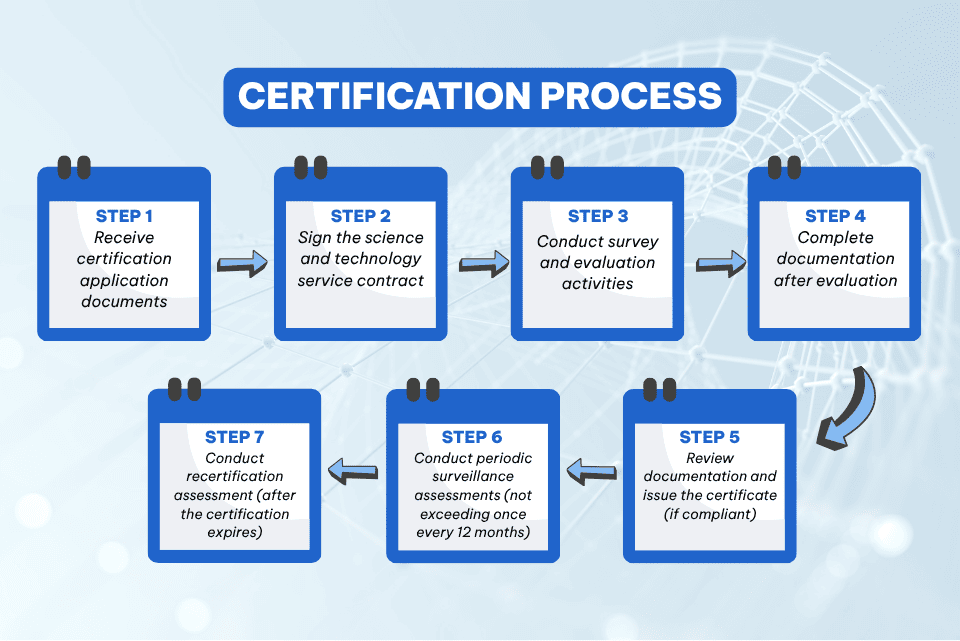
To obtain a Certificate of Conformity under QCVN 12-1:2011/BYT, the certification process generally includes the following steps:
Step 1: Receive and review the certification application.
Step 2: Sign the science and technology service agreement.
Step 3: Conduct on-site surveys and conformity assessment.
Step 4: Complete the post-assessment documentation.
Step 5: Review the assessment results and issue the Certificate of Conformity (if compliant).
Step 6: Conduct surveillance assessments at intervals not exceeding 12 months.
Step 7: Conduct recertification upon expiration of the certificate.
If your company requires conformity certification for plastic packaging and utensils under QCVN 12-1:2011/BYT, please contact ISSQ Quality Institute for professional assistance.
Publication Date: 13/07/2026


