
INSTITUTE FOR STANDARD AND QUALITY DEVELOPMENT STUDIES


Portland cement is an essential construction material that directly affects the quality, durability, and safety of buildings and infrastructure. When products fail to meet the prescribed technical requirements, various risks may arise for stakeholders involved. Conformity certification assessment for Portland cement in accordance with QCVN 16 is not only a legal requirement but also contributes to improving product quality and ensuring the safety and durability of construction works.
Portland cement is one of the most widely used construction materials in civil, industrial, and infrastructure projects. Product quality not only affects the strength and durability of structures but also relates to compliance with state regulations on construction materials.
According to QCVN 16:2023/BXD, Portland cement belongs to the group of construction material products that are required to obtain a Certificate of Conformity before being placed on the market. This certification serves as evidence that the product meets the technical and quality requirements specified in the national technical regulation.
In this article, ISSQ Quality Institute provides an overview of Portland cement, the requirements of QCVN 16:2023/BXD, and the benefits of conformity certification for this product.
Portland Cement is a hydraulic cement produced by finely grinding Portland cement clinker together with an appropriate amount of gypsum and, where applicable, suitable additives during the grinding process. When mixed with water, the cement undergoes hydration reactions, forming a hardened material that develops strength over time.
Thanks to its excellent strength, durability, and versatility, Portland cement is currently one of the most commonly used types of cement in the construction industry. It is widely used for producing concrete, masonry mortar, plastering mortar, and various structural components for civil, industrial, transportation, and infrastructure projects.
The quality of Portland cement directly impacts the durability, load-bearing capacity, and service life of a structure. Therefore, it must comply with technical requirements before being used or placed on the market.
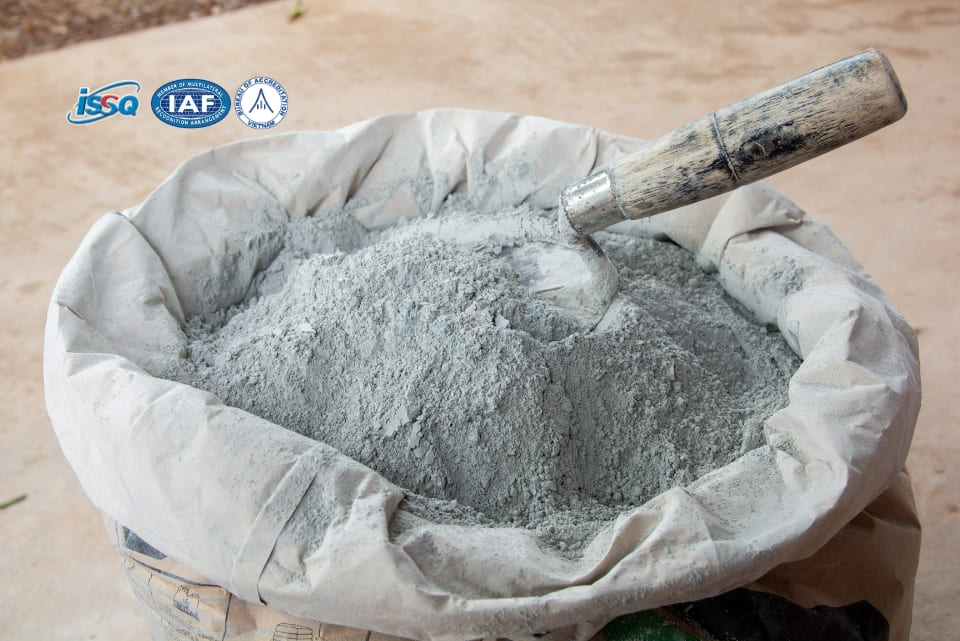
Portland cement is a critical material that directly affects the quality, durability, and safety of construction projects. Failure to meet technical requirements may result in significant risks for stakeholders.
These risks highlight the importance of quality control and conformity certification to ensure construction quality, protect end users, and comply with applicable regulations.
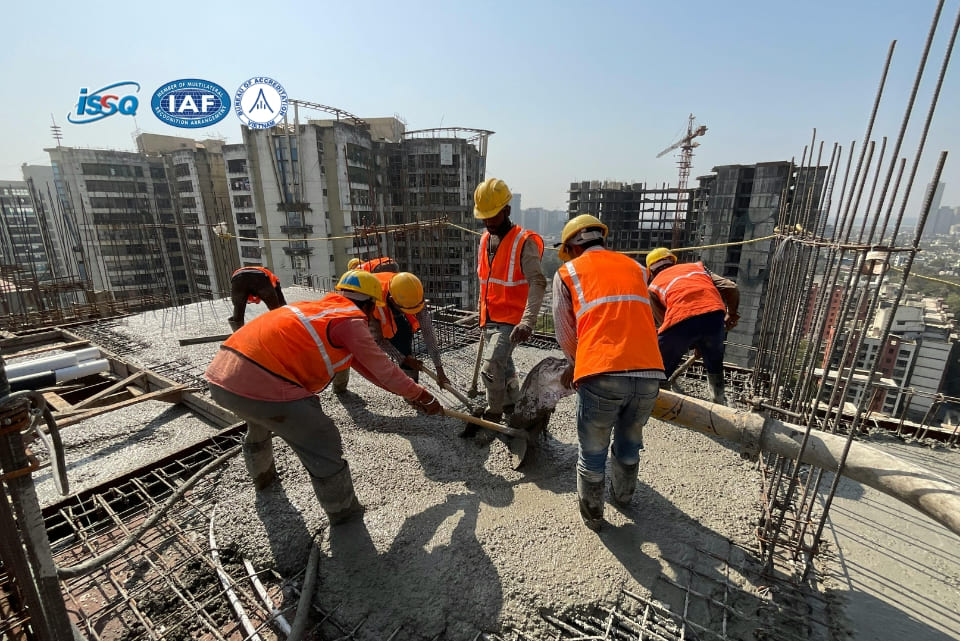
QCVN 16:2023/BXD is the National Technical Regulation on Construction Products and Goods issued by the Ministry of Construction of Vietnam. The regulation specifies technical requirements and management provisions applicable to Group 2 construction material products and goods as defined under the Law on Product and Goods Quality.
QCVN 16 applies to construction materials manufactured domestically, imported, traded, distributed, and used in construction projects within Vietnam. The primary objective of the regulation is to ensure product quality, construction safety, and the protection of consumer interests.
Certification of Portland cement in accordance with QCVN 16 is not only a legal requirement but also contributes to improved product quality, safety, and structural durability.
To ensure quality and safety in construction applications, Portland cement covered by QCVN 16:2023/BXD must comply with specified physical, mechanical, and chemical requirements. These technical criteria serve as the basis for conformity assessment, conformity certification, and product quality control before the product is placed on the market.
Below are some of the key technical requirements for Portland cement in accordance with QCVN 16:2023/BXD:
| Technical Requirement | Acceptance Criteria | Test Method | Sampling Procedure | |
| 1. Compressive Strength (MPa) - minimum after 3 days ± 45 min - minimum after 28 days ± 8 h
| PC40
21
40 | PC50
25
50 | TCVN 6016:2011 | Samples shall be collected from ten different locations within the same product batch, with approximately 4 kg taken from each location. A representative composite sample of approximately 20 kg shall be prepared for testing.
|
| 2. Soundness (Le Chatelier Method), max. | 10,0 | TCVN 6017:2015 | ||
| 3. Sulfur Trioxide (SO₃) Content, max. | 3.5 | TCVN 141:2023 | ||
| 4. Magnesium Oxide (MgO) Content, max. | 5.0* | |||
| 5. Loss on Ignition (LOI), max. - without limestone additive - with limestone additive |
3.0
3.5 | |||
| 6. Insoluble Residue, max. | 1.5 | |||
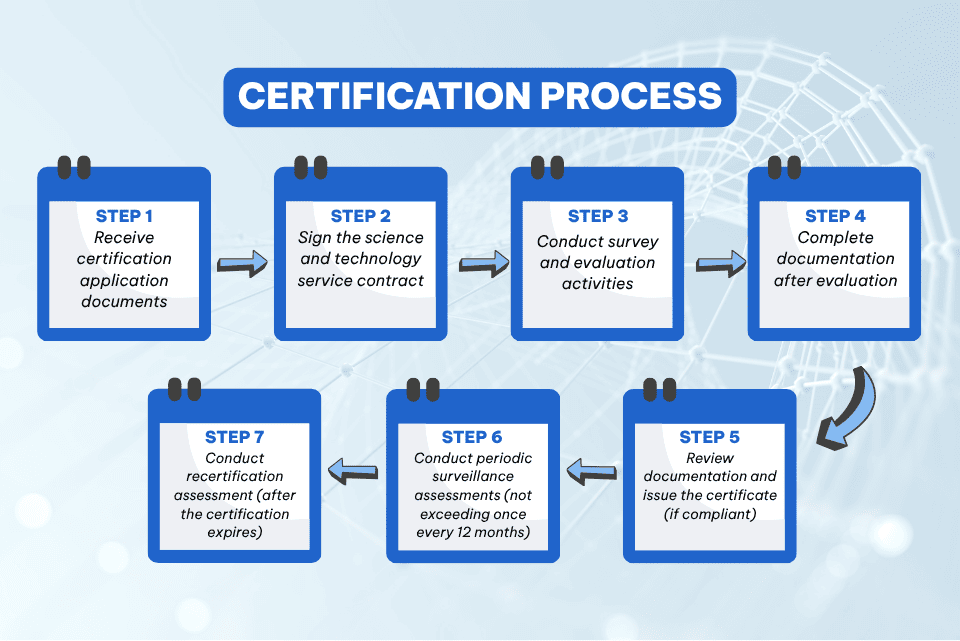
Certification Process for Portland Cement under QCVN 16 generally includes the following steps:
Step 1: Submission and acceptance of certification application documents.
Step 2: Signing of the science and technology service agreement.
Step 3: Conducting site surveys and conformity assessments.
Step 4: Completion of post-assessment documentation.
Step 5: Review of assessment results and issuance of the Certificate of Conformity (if compliant).
Step 6: Surveillance assessments at intervals not exceeding 12 months.
Step 7: Recertification assessment upon certificate expiration.
Conformity certification of Portland cement in accordance with QCVN 16:2023/BXD not only helps businesses comply with legal requirements but also delivers significant benefits to manufacturers, customers, and the construction industry as a whole.
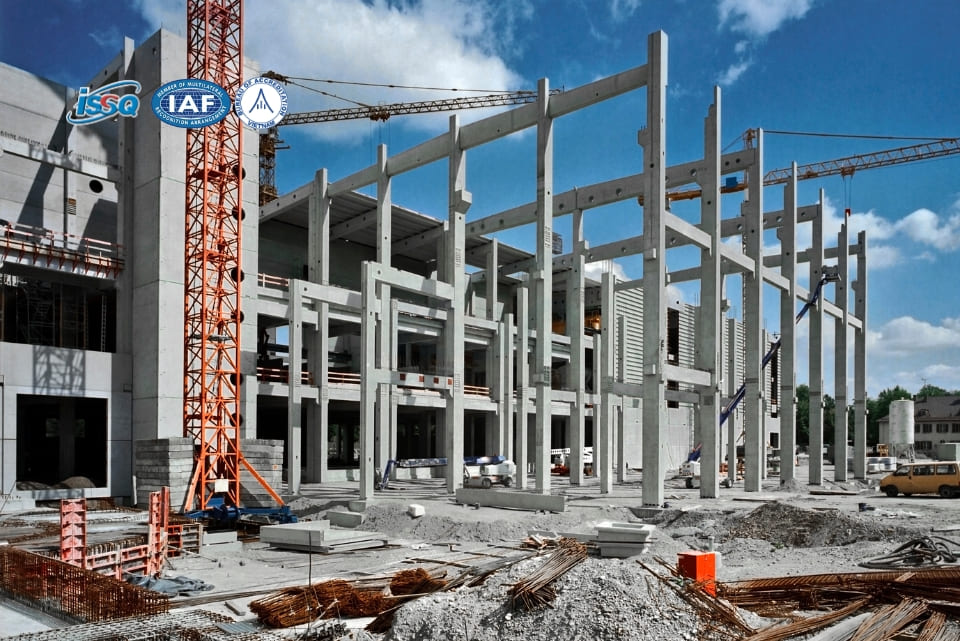
Conformity certification of Portland cement under QCVN 16:2023/BXD is not only a mandatory requirement for many construction material products but also an effective solution for enhancing product quality, protecting stakeholder interests, and ensuring the safety and durability of construction works.
For conformity certification services for Portland Cement under QCVN 16:2023/BXD, please contact ISSQ Quality Institute:
Publication Date: 17/06/2026


