
INSTITUTE FOR STANDARD AND QUALITY DEVELOPMENT STUDIES


LED lighting products are booming rapidly, driving strict requirements for electrical safety and electromagnetic compatibility (EMC). On December 31, 2025, the Ministry of Science and Technology officially issued QCVN 19:2025/BKHCN (under Circular 56/2025/TT-BKHCN) replacing QCVN 19:2019/BKHCN. The new regulation specifies a mandatory implementation roadmap starting June 1, 2026, and full enforcement from January 1, 2027, covering 5 key LED product groups.
QCVN 19:2025/BKHCN is the new National Technical Regulation specifying requirements for safety and electromagnetic compatibility (EMC) regarding LED lighting products. Issued by the Ministry of Science and Technology under Circular No. 56/2025/TT-BKHCN on December 31, 2025, this regulation officially supersedes QCVN 19:2019/BKHCN.
The rapid growth of the LED market has driven an increasing demand for lighting products across residential spaces, offices, factories, shopping malls, construction works, and specialized lighting projects. However, alongside energy efficiency and versatile applications, LED products must satisfy stringent criteria concerning electrical safety, electromagnetic compatibility, and technical quality.
Consequently, accurately determining the product coverage under QCVN 19:2025/BKHCN, corresponding HS codes, applicable standards, and conformity certification schemes is a critical matter for manufacturers, importers, and distributors of LED lighting products.
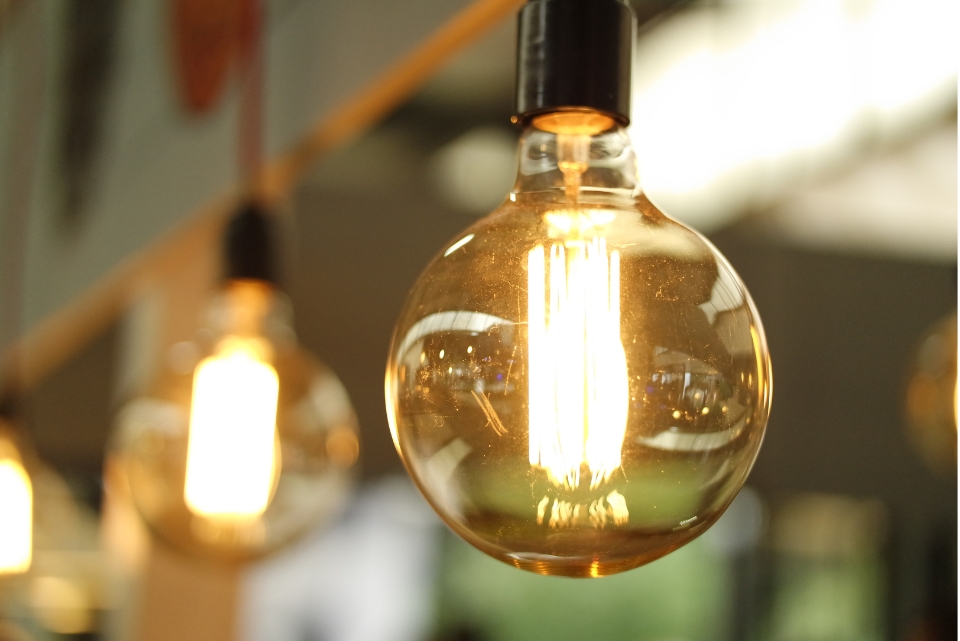
LED lights have become one of the most widely adopted lighting solutions in the market thanks to advantages such as energy savings, long service life, diverse dimensions, ease of design, and broad spatial application.
From homes, retail shops, and corporate offices to industrial plants, warehouses, schools, hospitals, and commercial complexes, the demand for LED lighting continues to expand. The variety of designs has created diverse product categories, including LED bulbs, fixed LED luminaires, recessed LED luminaires, and portable LED luminaires.
However, a lighting product must do more than just emit light. It must ensure electrical safety during operation and avoid generating harmful electromagnetic interference (EMI) that could affect surrounding electrical and electronic equipment.
This is why QCVN 19:2025/BKHCN establishes comprehensive safety and electromagnetic compatibility (EMC) requirements for regulated LED products.
For enterprises, identifying whether a product falls within the scope of this regulation must be executed right from the planning phase of manufacturing or importing. Rather than relying solely on commercial trade names, businesses must carefully evaluate product classification, technical specifications, and HS codes.
The full official title of QCVN 19:2025/BKHCN is:
"National Technical Regulation on Safety and Electromagnetic Compatibility for LED Lighting Products."
Issued under Circular No. 56/2025/TT-BKHCN by the Ministry of Science and Technology, QCVN 19:2025/BKHCN replaces QCVN 19:2019/BKHCN and establishes safety, EMC, and management mandates for LED lighting products listed in Annex A.
A key point for enterprises to note is the two-stage implementation roadmap:
Under Article 4 of Circular 56/2025/TT-BKHCN, starting June 1, 2026, products listed in Annex A—excluding items under HS code 9405.11.99—must comply with QCVN 19:2025/BKHCN before being placed on the market.
Starting January 1, 2027, all LED lighting products listed in Annex A must comply with QCVN 19:2025/BKHCN prior to market circulation.
Therefore, enterprises currently manufacturing, importing, or trading LED products should proactively review their product portfolios to avoid operational bottlenecks when the regulation takes full effect.
This section represents a core focus for businesses seeking QCVN 19:2025/BKHCN conformity certification.
According to Annex A of the regulation, the main LED lighting product groups falling within the regulatory scope include:
This group covers integrated LED lamps designed to operate at supply voltages exceeding 50 V.
Designated HS Codes: 8539.52.10 and 8539.52.90
Safety Requirements: Assessed under TCVN 8782:2017 (equivalent to IEC 62560:2011 & AMD1:2015).
EMC Requirements: Assessed under applicable standards such as TCVN 7186:2018 and TCVN 12679:2019.
The second group comprises double-capped LED tube lamps engineered as direct replacements for traditional linear fluorescent tubes.
Designated HS Code: 8539.52.90
Safety Requirements: Applied in accordance with TCVN 11846:2017 (equivalent to IEC 62776:2014).
EMC Requirements: Applied in accordance with TCVN 7186:2018 and TCVN 12679:2019.
This category includes widely used surface-mounted or suspended fixtures in residential homes, offices, stores, factories, and commercial structures.
Designated HS Codes Listed in Annex A: 9405.11.91, 9405.11.99, and 9405.21.90
Products in this group must satisfy corresponding safety standard requirements outlined in QCVN 19:2025/BKHCN as well as applicable EMC parameters.
Recessed fixed LED luminaires—commonly found as downlights, recessed spotlights, or panel lights designed to be built directly into ceilings or building structures—also fall under QCVN 19:2025/BKHCN. These products see heavy application in modern residential buildings, hotels, corporate headquarters, and commercial centers.
The final group covers portable general-purpose LED luminaires. These include lighting products that can be relocated during use, such as certain desk lamps, floor lamps, or portable task lights. Products in this class must likewise satisfy safety and EMC standards cited in Annex A of QCVN 19:2025/BKHCN.
Summary Table of Product Categories
| No. | Product Category | Representative HS Codes |
| 1 | Self-ballasted LED lamps operating at voltage > 50 V | 8539.52.10; 8539.52.90 |
| 2 | Double-capped LED lamps replacing linear fluorescent lamps | 8539.52.90 |
| 3 | Fixed general-purpose LED luminaires | 9405.11.91; 9405.11.99; 9405.21.90 |
| 4 | Recessed fixed general-purpose LED luminaires | Per regulatory scope |
| 5 | Portable general-purpose LED luminaires | Per regulatory scope |
Note: HS codes serve as a reference for product identification. Enterprises should not rely exclusively on HS codes to conclude whether a product requires certification, but must cross-check physical attributes, construction, intended use, and technical scope against QCVN specifications.
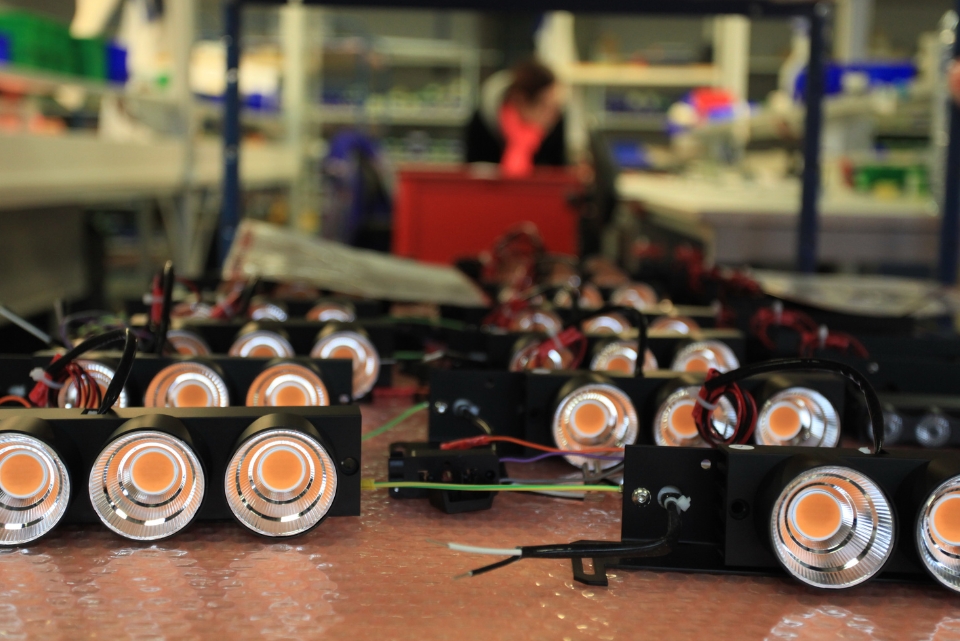
For products within the mandatory scope of QCVN 19:2025/BKHCN, compliance is far more than a voluntary quality check.
The technical regulation explicitly specifies technical and administrative requirements that products must satisfy prior to market release according to the enforcement schedule. Applicable entities include organizations and individuals manufacturing, importing, or trading LED lighting products under Annex A.
Key reasons include:
Fulfilling Statutory Obligations: Enterprises must execute conformity assessment procedures and register declarations of conformity as mandated by state management authorities.
Controlling Electrical Safety: Compliance guarantees strict management over insulation, shock protection, and thermal safety of LED devices.
Managing Electromagnetic Compatibility (EMC): Lighting products can emit electromagnetic disturbances or be affected by surrounding electromagnetic fields. EMC compliance ensures devices operate seamlessly without interfering with other electronics.
Facilitating Lawful Market Distribution: Completing certification dossiers and conformity declarations allows businesses to navigate manufacturing, importing, and distribution activities with full legal assurance.
For Manufacturers: Conformity certification equips manufacturers with structured tools to manage product quality before market release, providing a foundation for standardized production and higher product reliability.
For Importers: Correctly determining regulatory scope early helps importers prepare technical dossiers, test samples, and evaluation procedures proactively, preventing customs delays or extra storage costs.
For Distributors: Compliant products offer distributors verified assurance when selecting inventory, boosting credibility with retail networks, partners, and commercial buyers.
For Consumers: Strict safety and EMC enforcement elevates overall user safety during daily operation.
Compared to previous regulations, QCVN 19:2025/BKHCN provides clearer definitions of regulatory boundaries and introduces updated terminology regarding LED products.
Notably, the regulation incorporates specific provisions for small-quantity imported goods and adds rules for test sample grouping. Where applicable, sample grouping allows businesses to reduce the total number of required test samples, thereby substantially optimizing testing fees and certification expenses.
This is a critical advantage for companies managing extensive SKU lists, as logical sample grouping significantly streamlines appraisal time and operational cost.
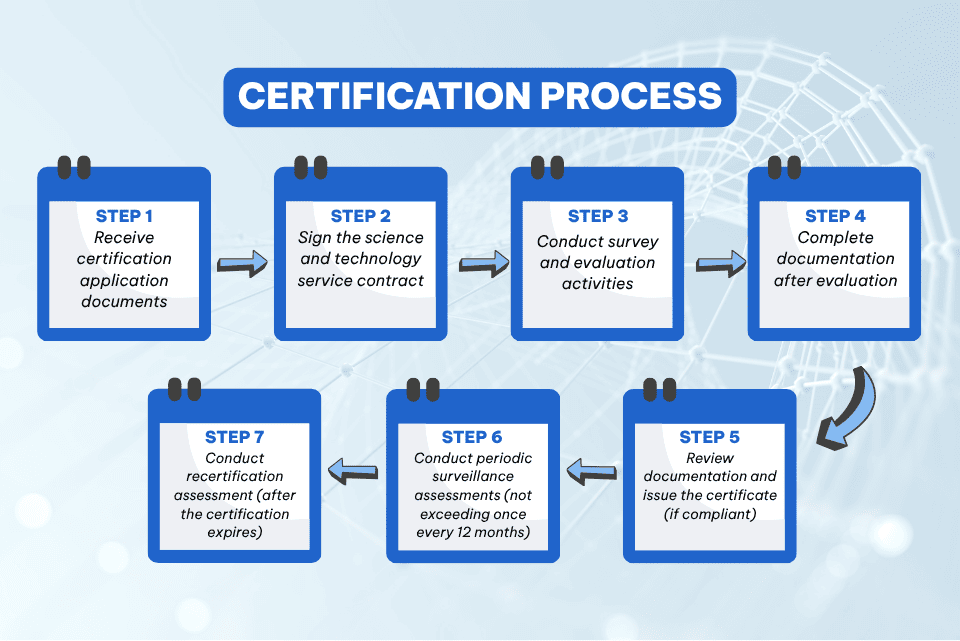
Step 1: Receive and review the certification registration dossier.
Step 2: Sign the technical service contract.
Step 3: Conduct on-site audit and sample selection.
Step 4: Finalize post-audit documentation.
Step 5: Perform dossier appraisal and issue the Conformity Certificate (upon passing).
Step 6: Execute periodic surveillance audits.
Step 7: Conduct re-certification evaluation (upon certificate expiration).
If your company requires evaluation and certification services under QCVN 19:2025/BKHCN, please contact ISSQ Quality Institute via hotline +84 981851111 or email vienchatluong@issq.org.vn | tcvn@issq.org.vn for procedural assistance.


