
INSTITUTE FOR STANDARD AND QUALITY DEVELOPMENT STUDIES


11/07/2026
Digital transformation has become an inevitable trend, enabling organizations to improve operational efficiency, optimize business processes, and strengthen their competitive advantage in an increasingly technology-driven environment. However, achieving successful digital transformation requires more than investing in advanced technologies. Organizations must also establish a structured and integrated IT service management system to ensure that technology delivers sustainable business value.
In this article, ISSQ Quality Institute explores the role of ISO/IEC 20000-1 in supporting digital transformation and the value this international standard brings to improving the quality and effectiveness of IT service management.
Many organizations still view digital transformation simply as investing in software, hardware, or emerging technologies such as Cloud Computing, Artificial Intelligence (AI), and Big Data. In reality, technology is only an enabler. The success of digital transformation ultimately depends on how effectively an organization manages, operates, and continuously improves its IT services.
As organizations become increasingly dependent on information technology, IT services support almost every business function—from internal administration and production to sales, customer service, and business operations. Without effective IT service management, organizations may encounter a variety of challenges, including:
Therefore, alongside investments in IT infrastructure and technology, organizations should establish an IT service management system based on internationally recognized best practices. This enables standardized processes, improved service quality, and continual improvement, forming a solid foundation for successful and sustainable digital transformation.

ISO/IEC 20000-1:2018 is the international standard that specifies the requirements for an Information Technology Service Management System (SMS). It is designed to help organizations establish, implement, maintain, and continually improve their IT service management system, ensuring that IT services consistently meet the needs of customers and other interested parties.
The standard adopts both a process-based approach and risk-based thinking, enabling organizations to effectively manage the entire IT service lifecycle—from planning, design, and transition to service delivery, operation, monitoring, and continual improvement. By standardizing management processes, organizations can improve service consistency, minimize service disruptions, and optimize resource utilization.
ISO/IEC 20000-1:2018 is applicable to any organization that provides or manages IT services, regardless of its size or industry, including
As digital transformation accelerates across industries, ISO/IEC 20000-1:2018 serves as an effective framework for building a professional IT service management system, enhancing service quality, improving operational efficiency, and establishing a strong foundation for sustainable growth.

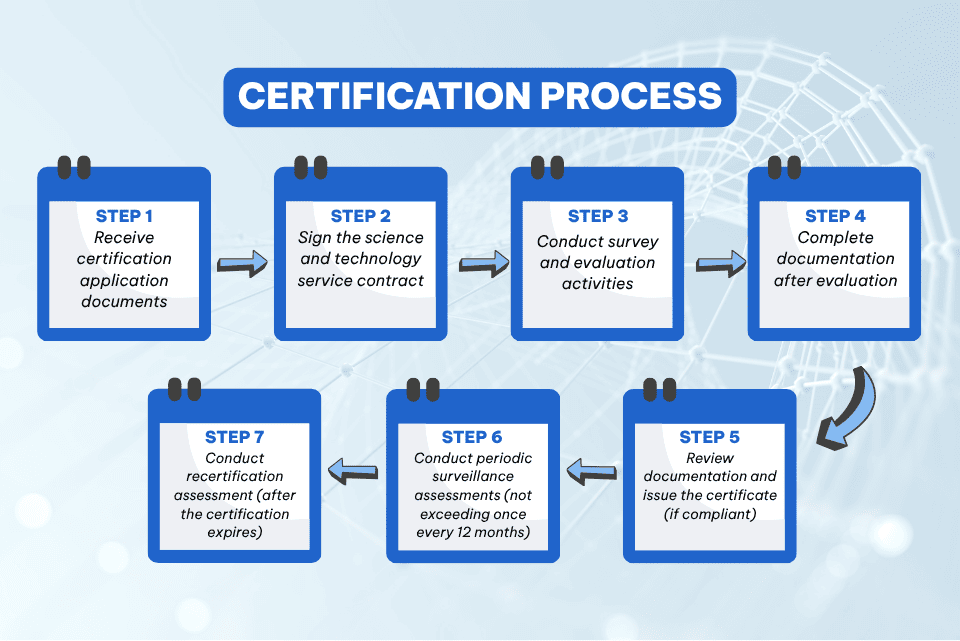
The certification process for ISO/IEC 20000-1:2018 generally includes the following steps:
Step 1: Receive and review the certification application.
Step 2: Sign the science and technology service agreement.
Step 3: Conduct on-site surveys and conformity assessment.
Step 4: Complete the post-assessment documentation.
Step 5: Review the assessment results and issue the certificate (if compliant).
Step 6: Conduct surveillance assessments at intervals not exceeding 12 months
Step 7: Conduct recertification upon expiration of the certificate.
If your organization requires ISO/IEC 20000-1:2018 Information Technology Service Management System certification, please contact ISSQ Quality Institute for professional assistance.
Publication Date: 11/07/2026


