
INSTITUTE FOR STANDARD AND QUALITY DEVELOPMENT STUDIES


02/10/2026
LED lighting products are becoming increasingly popular in residential, commercial, industrial, and urban infrastructure projects. Along with the rapid growth of the market, electrical safety and electromagnetic compatibility (EMC) requirements for LED products have received growing attention.
Specifically, QCVN 19:2025/BKHCN was issued to replace QCVN 19:2019/BKHCN, specifying safety, electromagnetic compatibility, and regulatory management requirements for selected LED lighting product groups. The technical regulation was promulgated under Circular No. 56/2025/TT-BKHCN dated December 31, 2025, by the Ministry of Science and Technology.
So, which products fall within the scope of QCVN 19:2025/BKHCN? How should manufacturing and importing enterprises carry out conformity certification and declaration? Let’s explore the details in the article below.
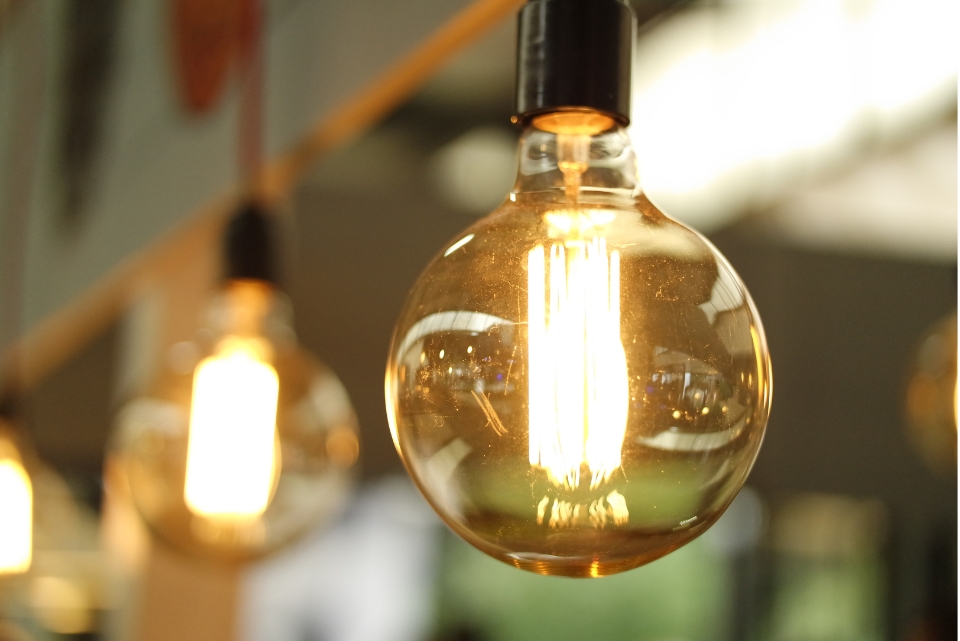
In today’s market, when referring to QCVN 19:2025/BKHCN, many enterprises commonly refer to it as the "LED light conformity regulation." While this term is easy to understand, it does not fully reflect the regulatory scope of the standard.
Not all products using LED technology automatically fall under QCVN 19:2025/BKHCN. The regulation explicitly defines applicable products in Annex A while linking the product scope with corresponding technical standards and HS codes.
Therefore, enterprises should not rely solely on commercial names such as "LED light," "LED bulb," or "decorative LED lamp" to determine conformity obligations.
To determine whether a product falls under QCVN 19:2025/BKHCN, enterprises must simultaneously evaluate:
Product type and construction;
Intended use;
Operating voltage;
Technical characteristics of the product;
Scope of coverage under QCVN 19:2025/BKHCN;
Corresponding HS code;
Safety and EMC standards referenced in Annex A.
This is particularly critical for importers handling multiple LED models, as misidentifying the application scope can affect testing schedules, certification, conformity declaration, and market distribution.
QCVN 19:2025/BKHCN is the National Technical Regulation on Safety and Electromagnetic Compatibility for LED Lighting Products.
Issued by the Ministry of Science and Technology under Circular No. 56/2025/TT-BKHCN dated December 31, 2025, it replaces QCVN 19:2019/BKHCN.
QCVN 19:2025/BKHCN focuses on two main groups of technical requirements:
Safety Requirements
LED products within the regulatory scope must fulfill safety requirements corresponding to each product category. Annex A outlines the standards used to evaluate safety for each LED group.
Electromagnetic Compatibility (EMC) Requirements
Products must comply with requirements regarding:
EMI – Electromagnetic Interference;
EMS – Electromagnetic Susceptibility/Immunity.
Corresponding EMC standards are specified in Annex A of QCVN 19:2025/BKHCN.
A crucial point for enterprises to note is that products within the scope of QCVN 19:2025/BKHCN—whether manufactured, assembled domestically, or imported—must undergo conformity declaration, bear the CR mark, and be labeled in accordance with regulations prior to market circulation.
Annex A of QCVN 19:2025/BKHCN specifies 5 groups of LED lighting products that must comply with the regulation's requirements:

Group 1: Self-ballasted LED lamps for general lighting services working at voltages > 50 V
This group comprises integrated LED bulbs where the control gear and elements necessary for stable light source operation are integrated into the bulb, designed to connect directly to the power supply.
Specified HS Codes include: 8539.52.10, 8539.52.90
Safety requirements are evaluated under TCVN 8782:2017 (equivalent to IEC 62560); EMC requirements refer to TCVN 7186:2018 and TCVN 12679:2019.
Group 2: Double-capped LED lamps designed to replace linear fluorescent lamps
This group includes double-capped LED tube lamps designed to retrofit straight linear fluorescent tubes.
Specified HS Code: 8539.52.90
Referenced safety standard: TCVN 11846:2017 (equivalent to IEC 62776); EMC requirements follow standards specified in Annex A.
Group 3: Fixed general-purpose LED luminaires
This group consists of general-purpose LED luminaires designed for fixed installation.
Listed HS Codes in Annex A: 9405.11.91, 9405.11.99, 9405.21.90
Safety requirements refer to IEC 60598-2-1:2020 and TCVN 7722-1:2017; EMC requirements apply TCVN 7186:2018 and TCVN 12679:2019.
Group 4: Recessed general-purpose LED luminaires
This category covers recessed fixed LED luminaires commonly installed in residential, office, retail, commercial center, and other building projects.
Safety requirements follow IEC 60598-2-2:2023 combined with TCVN 7722-1:2017; EMC requirements follow corresponding standards in Annex A.
Group 5: Portable general-purpose LED luminaires
Includes general-purpose LED luminaires designed to be moved during operation.
Safety requirements refer to IEC 60598-2-4:2017 and TCVN 7722-1:2017; EMC requirements apply TCVN 7186:2018 and TCVN 12679:2019.
Product Group Summary Table
| Group | Product Category | Representative HS Codes |
| 1 | Self-ballasted LED lamps working at voltages > 50 V | 8539.52.10; 8539.52.90 |
| 2 | Double-capped LED lamps replacing linear fluorescent lamps | 8539.52.90 |
| 3 | Fixed general-purpose LED luminaires | 9405.11.91; 9405.11.99; 9405.21.90 |
| 4 | Recessed general-purpose LED luminaires | According to Annex A |
| 5 | Portable general-purpose LED luminaires | According to Annex A |
HS codes are used in accordance with import/export classification lists and may be updated when legal HS regulations change. Enterprises should cross-reference current HS codes alongside actual product specifications rather than relying solely on legacy HS codes.
QCVN 19:2025/BKHCN applies to organizations and individuals involved in the manufacturing, assembly, import, and distribution of LED lighting products within the regulation's scope.
For domestic manufacturers: Controlling products right from design, component selection, manufacturing, and testing helps mitigate the risk of technical non-compliance.
For importers: Accurately identifying product categories, HS codes, and testing/certification requirements before clearing goods for circulation is essential.
Note that QCVN 19:2025/BKHCN does not mean every product with "LED" in its commercial name requires mandatory certification. The product must fall within the scope defined in Annex A and fulfill the regulation's application conditions.
For Enterprises
Conformity certification provides enterprises with formal proof that applicable products have been assessed against technical requirements. For manufacturers, testing and evaluation help identify potential issues related to electrical safety, EMI, and immunity. For importers, early preparation of certification and compliance dossiers ensures proactive market entry.
For Consumers
Safety and EMC requirements safeguard product quality for LED items within scope. Consumers gain a reliable basis to recognize compliant products through formal documentation and the CR mark.
For the Market
Implementing QCVN 19:2025/BKHCN creates a unified technical standard across covered LED product categories, enhancing overall quality control and market safety.
Enterprises can implement the certification process following these standard steps:
Step 1: Determine whether the product falls under QCVN 19:2025/BKHCN
Enterprises provide product details: product name, model, catalog, technical specifications, voltage, product photos, intended use, HS code, manufacturer, and origin. The certification body cross-references Annex A to confirm applicability.
Step 2: Identify testing standards
Select corresponding safety and EMC requirements based on the product group. Defining the correct testing standards early prevents incomplete testing or re-testing.
Step 3: Sampling and testing
Samples are drawn according to assessment guidelines. Test results must demonstrate compliance with safety and EMC requirements. Testing for certification must be conducted by qualified testing bodies per current regulations.
Step 4: Assessment and conformity certification
QCVN 19:2025/BKHCN mandates conformity certification under Scheme 1 – representative sample testing according to Circular No. 14/2026/TT-BKHCN and Circular No. 36/2026/TT-BKHCN dated June 30, 2026, issued by the Ministry of Science and Technology. Upon compliance, the certification body issues the QCVN 19:2025/BKHCN Certificate of Conformity (valid for up to 3 years).
Step 5: Conformity declaration
Following successful certification, enterprises submit the conformity declaration dossier as required. The declaration must be based on certification results issued by an accredited certification body.
Step 6: Affixing the CR mark and product labeling
Covered products must have the CR mark affixed and product labels attached according to statutory guidelines before market release.
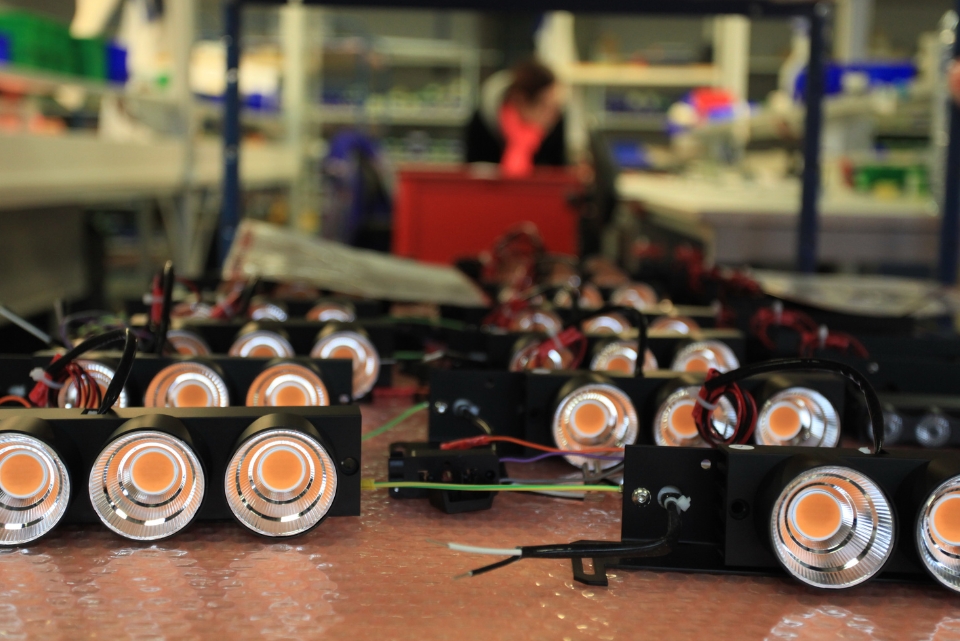
A key aspect when implementing QCVN 19:2025/BKHCN is that not all product groups apply simultaneously.
According to Circular 56/2025/TT-BKHCN:
From June 1, 2026: Products in Annex A, except those under HS code 9405.11.99, must comply with QCVN 19:2025/BKHCN prior to market circulation.
From January 1, 2027: All products in Annex A, including HS code 9405.11.99, must meet QCVN 19:2025/BKHCN prior to market circulation.
Currently, enterprises manufacturing, trading, or importing covered LED products should review dossiers and certification statuses according to their specific product group and timeline.
QCVN 19:2025/BKHCN is a crucial regulation for manufacturing, importing, and trading LED lighting products within its scope. The standard focuses on safety and EMC requirements while establishing mandates for conformity certification, declaration, CR marking, and labeling prior to circulation.
Enterprises must clearly distinguish among the 5 product groups in Annex A. Accurately identifying product scope, HS codes, testing standards, and implementation timelines allows businesses to remain proactive throughout the certification process.
If your enterprise produces or imports integrated LED bulbs, double-capped LED tubes, fixed LED luminaires, recessed LED lights, or portable LED lamps, please contact ISSQ Quality Institute via hotline: +84 981851111 or email: vienchatluong@issq.org.vn | tcvn@issq.org.vn for procedural assistance.


