
INSTITUTE FOR STANDARD AND QUALITY DEVELOPMENT STUDIES


13/11/2026
Against the backdrop of the increasingly developed electrical equipment market, product quality, safety, and transparency are becoming decisive factors in determining business competitiveness. QCVN 25:2025/BKHCN conformity certification not only helps businesses meet state regulatory requirements but is also regarded as a “shield” that protects brand reputation, strengthens customer confidence, and lays the foundation for sustainable development among electrical equipment manufacturers and importers in Vietnam.
The rapid development of urbanization and industrialization, together with the growing demand for housing, apartment buildings, commercial areas, and infrastructure projects, is making Vietnam’s electrical equipment market increasingly diverse. Alongside this development comes an urgent need for product quality control, particularly for equipment designed to protect the safety of electrical systems.
In civil engineering projects, electrical switching and circuit protection devices play an important role in reducing the risks of overloads, short circuits, and incidents involving leakage current. These risks can cause property damage, disrupt production and business operations, and threaten user safety.
However, the electrical equipment market still faces several challenges, including differences in product quality, limited traceability, and a lack of transparency in technical information. Selecting products based solely on price or external appearance may expose consumers and construction contractors to unpredictable risks.
In this context, the application of National Technical Regulations has become an important tool for establishing consistent safety requirements and providing a basis for assessing product quality before products are placed on the market.
QCVN 25:2025/BKHCN is a specific measure to formalize management requirements for electrical equipment used in household electrical installations and similar systems.
For manufacturers and importers, proactively understanding the regulations, preparing documentation, and implementing conformity certification in accordance with applicable requirements not only helps ensure legal compliance but also creates advantages in distribution, bidding, and commercial partnerships.
In particular, as consumers become increasingly concerned about product quality and electrical safety, products with clear evidence of conformity assessment will have a stronger foundation for building market trust.
Therefore, conformity certification is no longer merely an administrative procedure but is becoming an integral part of businesses’ quality management and brand development strategies.
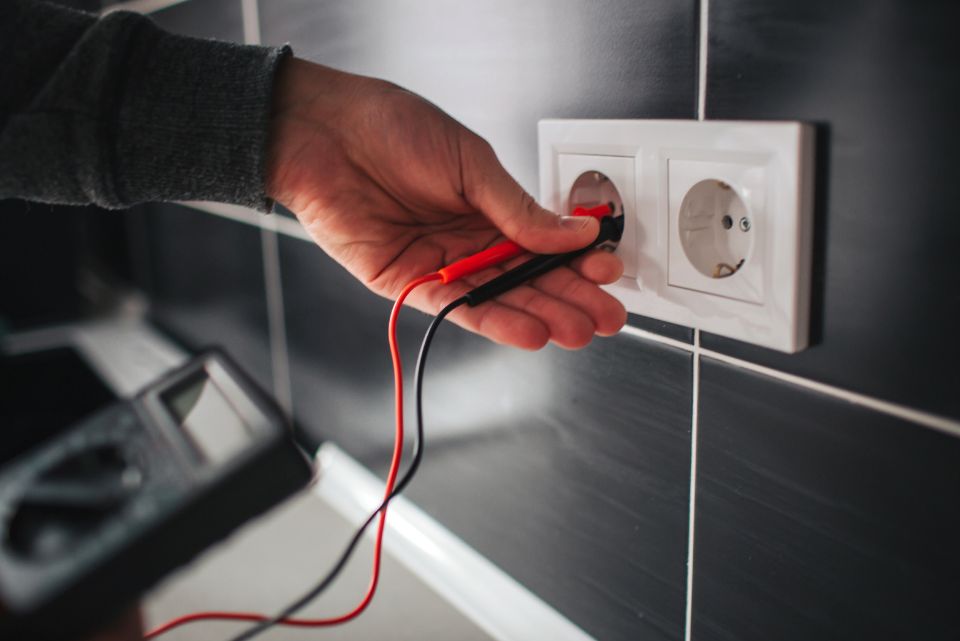
QCVN 25:2025/BKHCN is the National Technical Regulation on electrical equipment for household electrical installations and similar electrical systems, promulgated by the Ministry of Science and Technology together with Circular No. 01/2025/TT-BKHCN dated February 14, 2025.
The regulation specifies safety and management requirements for electrical equipment within its scope of application, aiming to protect users, minimize electrical safety risks, and improve the effectiveness of quality management for products and goods.
Scope of Application of QCVN 25:2025/BKHCN
The regulation applies to electrical equipment designed for installation in electrical distribution systems with a rated voltage of up to 440 V AC in civil buildings, as specified in Annex A and Annex B.
The product categories covered include:
Miniature circuit breakers (MCBs) for overcurrent protection, with a rated current not exceeding 63 A.
Residual current operated circuit breakers with integral overcurrent protection (RCBOs), with a rated current not exceeding 63 A.
Residual current operated circuit breakers without integral overcurrent protection (RCCBs), with a rated current not exceeding 63 A.
Electrical sockets, plugs, socket adaptors, and extension cord sets with a rated current not exceeding 32 A.
Household electrical switches with a rated current not exceeding 20 A.
Not all electrical equipment falls within the scope of this regulation. Businesses need to examine product specifications, intended uses, and the applicable product lists to accurately determine their compliance obligations.
Implementation Roadmap and Conformity Certification Requirements
Under Circular No. 01/2025/TT-BKHCN, the implementation roadmap consists of two important milestones:
April 1, 2025 – Voluntary Application Phase
The Circular takes effect, encouraging businesses to proactively implement the regulation.
April 1, 2027 – Mandatory Application Phase
Equipment listed in Annex A and Annex B must comply with QCVN 25:2025/BKHCN before being placed on the market.
Notably, under Circular No. 36/2026/TT-BKHCN, which took effect on July 1, 2026, product quality management is classified according to risk levels. Among the products covered, MCBs and RCBOs are classified as high-risk products. They must undergo a declaration of conformity based on certification results issued by a designated certification body, using conformity assessment Method 5 or Method 7 in accordance with Circular No. 14/2026/TT-BKHCN.
For other equipment falling within the scope of QCVN 25:2025/BKHCN, businesses need to determine the corresponding conformity assessment requirements based on the applicable product lists and current regulations, rather than applying a single assessment method to all products.
Accordingly, conformity certification refers to the process of assessing and confirming that a product meets the requirements of the relevant technical regulation through an authorized organization. Meanwhile, a declaration of conformity refers to the formal declaration that a product complies with applicable legal requirements. Although closely related, these are two distinct activities.
Understanding these requirements correctly enables businesses to prepare documentation in advance, select appropriate assessment methods, and minimize the risk of additional costs arising from incorrect procedures.
In a competitive business environment, product quality cannot be established solely through advertising messages or manufacturers’ promises. Businesses need objective, transparent, and reliable evidence.
When conducted within the appropriate scope and in accordance with applicable regulations, QCVN 25:2025/BKHCN conformity certification serves as an important basis for demonstrating that a product has been assessed against the corresponding technical requirements.
For distributors, project owners, and construction contractors, clear conformity documentation supports supplier selection, incoming product quality control, and risk management during product use.
For consumers, a product’s compliance with the relevant technical regulation helps build confidence when selecting electrical equipment for their homes.
This is the core value of conformity certification: transforming quality commitments into verifiable evidence.
In commercial activities, businesses compete not only on selling prices but also on their ability to meet technical requirements, maintain product stability, and establish brand credibility.
Proactively implementing QCVN 25:2025/BKHCN conformity certification can help businesses strengthen their position when working with dealer networks, distributors, project partners, and professional procurement organizations.
In particular, for businesses supplying electrical equipment to construction projects, documentation demonstrating conformity with the relevant technical regulation provides an important basis for partners to evaluate their supply capabilities, in addition to meeting the specific requirements of each project.
Businesses that implement the requirements early also gain more time to improve their products, stabilize their supply chains, and prepare for the mandatory implementation phase starting on April 1, 2027.
Rather than being forced to handle procedures reactively when the market enters the transition period, businesses can turn early preparation into a long-term competitive advantage.
For products subject to mandatory regulatory management, failure to meet technical regulation requirements or fulfill conformity assessment and declaration obligations may result in adverse consequences for business operations.
Depending on the nature of the violation, businesses may face regulatory measures in accordance with applicable laws, potentially affecting distribution schedules, brand reputation, and relationships with business partners.
Conversely, proactively implementing conformity certification enables businesses to identify non-conformities in their products or quality control processes at an early stage.
Through testing, assessment, and surveillance activities conducted under the applicable conformity assessment method, businesses can review product designs, materials, technical specifications, and product stability.
These improvements can help reduce the costs of correcting defects, minimize customer complaints, and enhance the effectiveness of quality management.
A strong brand is built not only on brand recognition but also on trust accumulated through product quality and a company's responsibility towards its customers.
In the electrical equipment industry, safety is particularly important because technical failures can lead to serious consequences.
Therefore, compliance with QCVN 25:2025/BKHCN also demonstrates a company's commitment to user safety and its responsibility to supply products that meet regulatory requirements.
This also provides a foundation for businesses to develop more meaningful communication strategies that emphasize actual product quality rather than focusing solely on price advantages.
However, businesses should note that conformity certification does not guarantee absolute product safety under all conditions. Actual safety performance also depends on proper equipment selection, installation, operation, and maintenance in accordance with technical instructions.
When combined with an effective quality management system, conformity assessment activities can become an important component of a business's sustainable development strategy.
In response to increasingly stringent electrical equipment safety requirements and the implementation roadmap of QCVN 25:2025/BKHCN, manufacturers, importers, and distributors need to shift from a reactive compliance mindset towards proactive quality management.
First, businesses should review their portfolios of products currently being manufactured, imported, and distributed; compare their technical specifications against the scope of the regulation; and determine the applicable conformity certification and declaration requirements based on product risk levels and current regulations.
Next, businesses should develop testing and conformity assessment plans, prepare technical documentation, and allocate appropriate resources. Working with competent testing and certification organizations whose scopes of operation match the relevant requirements will help businesses implement the process effectively and minimize documentation errors.
In addition, regulatory authorities and professional organizations should continue strengthening regulatory communication and guidance, helping businesses follow the implementation roadmap correctly while improving the effectiveness of product quality inspection and surveillance in the market.
From the consumer's perspective, priority should be given to electrical equipment with clear origins, complete technical information, and evidence of conformity with applicable regulatory requirements.

With a focus on promoting standards, metrology, quality, and conformity assessment activities, the Institute for Standards and Quality Research and Development (ISSQ Quality Institute) is committed to supporting businesses in understanding and implementing product and goods quality requirements.
Through professional activities in certification, training, and the provision of information on standards and technical regulations, ISSQ Quality Institute aims to help businesses improve their compliance awareness, standardize quality management activities, and strengthen their competitiveness.
Regarding QCVN 25:2025/BKHCN, businesses should select a certification body whose scope of operation and authorization are appropriate for the relevant products and which applies conformity assessment methods in accordance with current regulations.
Conformity certification should not be viewed merely as a condition for placing products on the market, but also as an investment in customer confidence, brand reputation, and the long-term development of the business.
In a market that increasingly values quality and responsibility, proactively meeting the requirements of QCVN 25:2025/BKHCN is how businesses can build a “shield” to protect their brands, demonstrate product value, and gradually strengthen their position in the supply chain.
If your company requires conformity certification assessment in accordance with QCVN 25:2025/BKHCN, please contact ISSQ Quality Institute via:
Hotline: +84 981851111
Email: vienchatluong@issq.org.vn | tcvn@issq.org.vn
Our team will be pleased to provide support and guidance on the relevant procedures.


