
INSTITUTE FOR STANDARD AND QUALITY DEVELOPMENT STUDIES


30/10/2026
The textile and garment industry is one of Vietnam's key manufacturing sectors, providing employment for a large workforce and playing an important role in global supply chains. However, amid increasingly intense market competition, textile and garment enterprises are facing new requirements concerning product quality, delivery schedules, production costs, traceability, and environmental responsibility.
Customers are concerned not only with pricing but also with consistent quality, the ability to fulfill large orders, production transparency, and risk control capabilities. In particular, international brands are imposing increasingly stringent requirements on suppliers regarding technical standards, production conditions, and supply chain sustainability.
In this context, digital transformation in the textile and garment industry is becoming an important direction for businesses to optimize operations, improve labor productivity, and gradually transition from manual management methods to data-driven management.
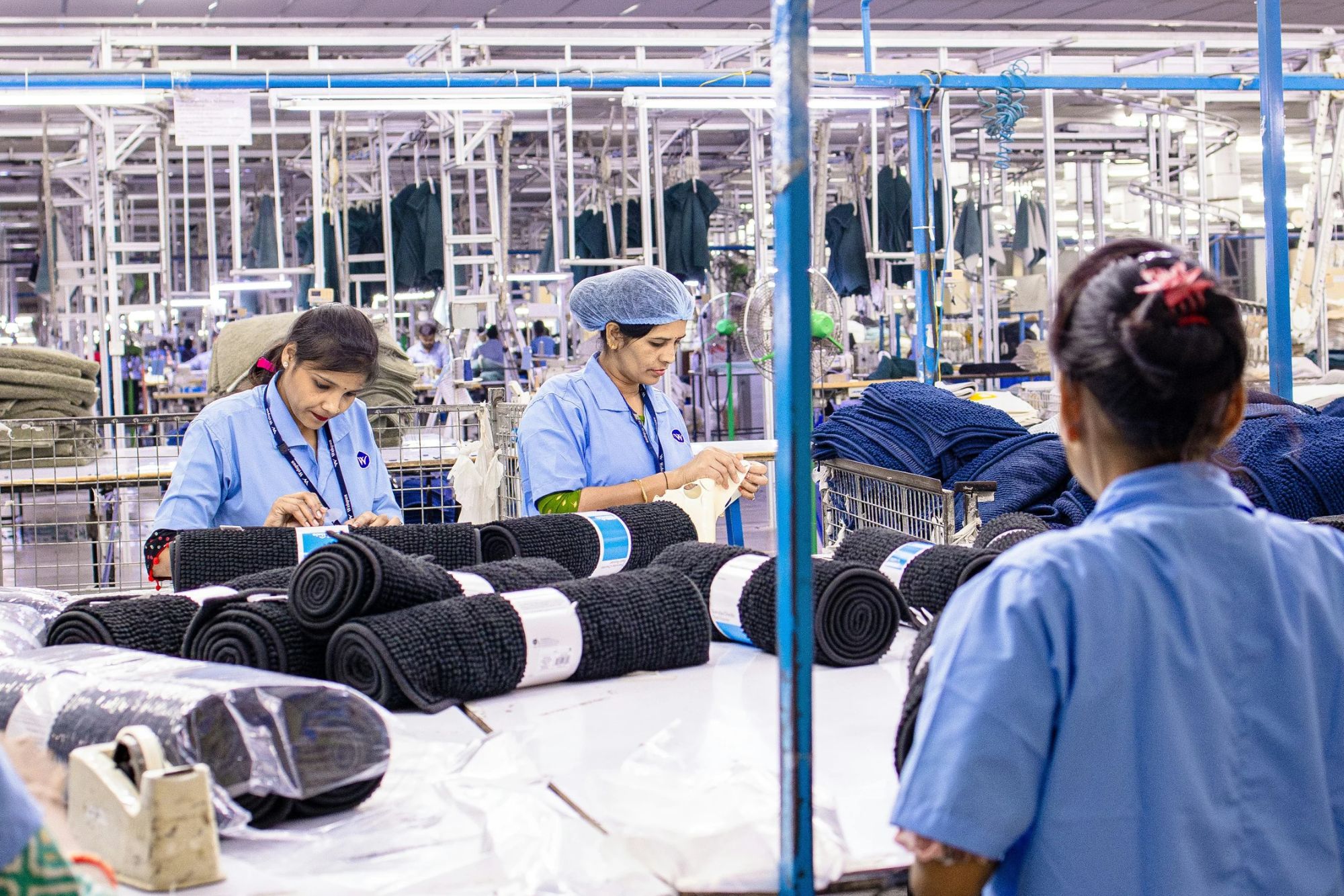
Although many enterprises have invested in modern machinery and equipment, production management in some organizations still relies heavily on personal experience, manually maintained spreadsheets, and paper-based records.
Some common limitations include:
These issues not only affect profitability but also reduce the ability of businesses to fulfill orders with demanding requirements.
Digital transformation in the textile and garment industry is not simply about purchasing software or replacing paper records with electronic documents. It is a comprehensive process of transforming how businesses manage data, organize production, control quality, and coordinate activities across departments.
Solutions can be implemented in stages, ranging from digitizing records and using order management and warehouse management software to adopting Enterprise Resource Planning (ERP), Manufacturing Execution Systems (MES), Computer-Aided Design (CAD), and data analytics.
When appropriately implemented, digital transformation helps businesses identify bottlenecks early, reduce waiting times, utilize resources efficiently, and improve their ability to meet customer requirements.
To achieve meaningful results from digital transformation, businesses need to combine technology with quality management systems and compliance with relevant technical regulations. ISO 9001 and QCVN 1:2017/BCT may serve different purposes depending on a company's operations and product portfolio.
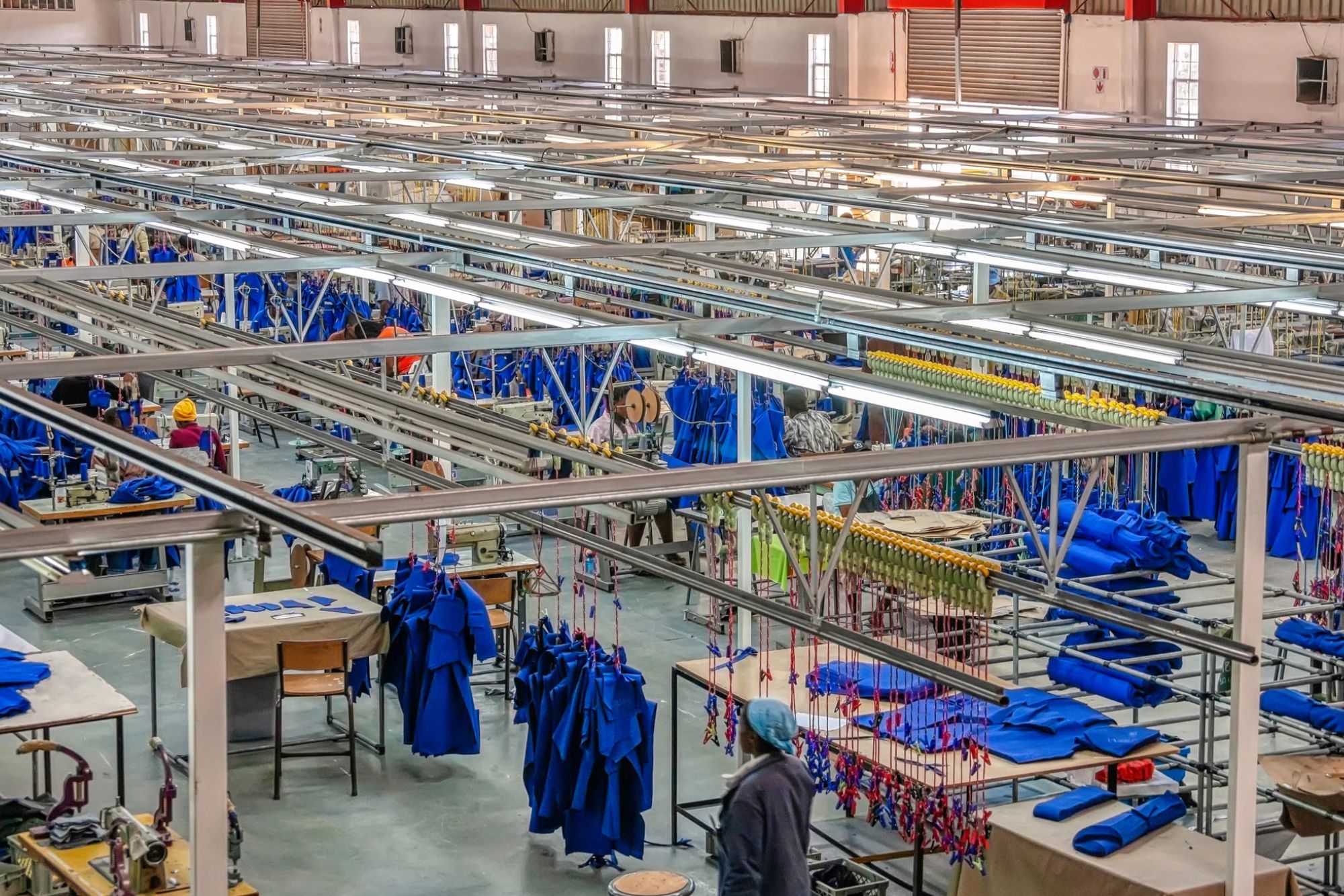
ISO 9001 is an international standard specifying requirements for quality management systems. It helps businesses establish clear workflows, control risks, monitor performance, and achieve continuous improvement.
For textile and garment enterprises, implementing ISO 9001 can support the management of the entire process, from receiving customer requirements, sample design, raw material selection, and production planning to finished product inspection and delivery.
Key areas to focus on when implementing ISO 9001 include:
When combined with management software, ISO 9001 helps businesses establish structured data, minimize inconsistencies during data updates, and improve record traceability.
However, it is important to understand that ISO 9001 certification applies to the quality management system. It does not directly certify that all garment products meet every technical requirement or legal regulation.
In addition to quality management, textile and garment enterprises must pay attention to national technical regulations relevant to the specific products they manufacture, import, or distribute.
Regarding QCVN 1:2017/BCT, businesses need to verify the exact name of the regulation, its scope, applicable products, and any amendments, replacements, or related regulations currently in force before developing a compliance plan.
Important note: Businesses should not automatically assume that QCVN 1:2017/BCT applies to all textile and garment products. They need to verify whether this regulation actually covers the products intended for the market. Depending on the type of goods, other regulations concerning textile products, chemical safety, or industry-specific technical requirements may need to be considered.
Correctly identifying applicable technical regulations helps businesses avoid applying inappropriate requirements, incurring unnecessary costs, or overlooking compliance obligations.
During digitalization, businesses should establish a list of applicable legal documents and technical regulations for each product category, manage document versions, and retain testing results, conformity assessment records, and relevant supporting documents as required.
Where regulations mandate conformity certification or declarations of conformity for specific products, businesses must follow the prescribed methods and procedures. Digital transformation supports document management but does not replace legally required conformity assessment obligations.
ISO 9001, compliance with technical regulations, and digital transformation can complement one another.
ISO 9001 establishes a foundation for processes and responsibilities; technical regulations define mandatory requirements for products within their scope; and digital technology helps businesses manage data, monitor progress, and control implementation.
For example, a garment manufacturer can use quality management software to record raw material inspection results, track defects on individual production lines, store supplier records, and issue alerts when a production batch has not completed the necessary inspection steps.
This approach helps businesses avoid establishing procedures solely for certification audits without generating practical value in production operations.
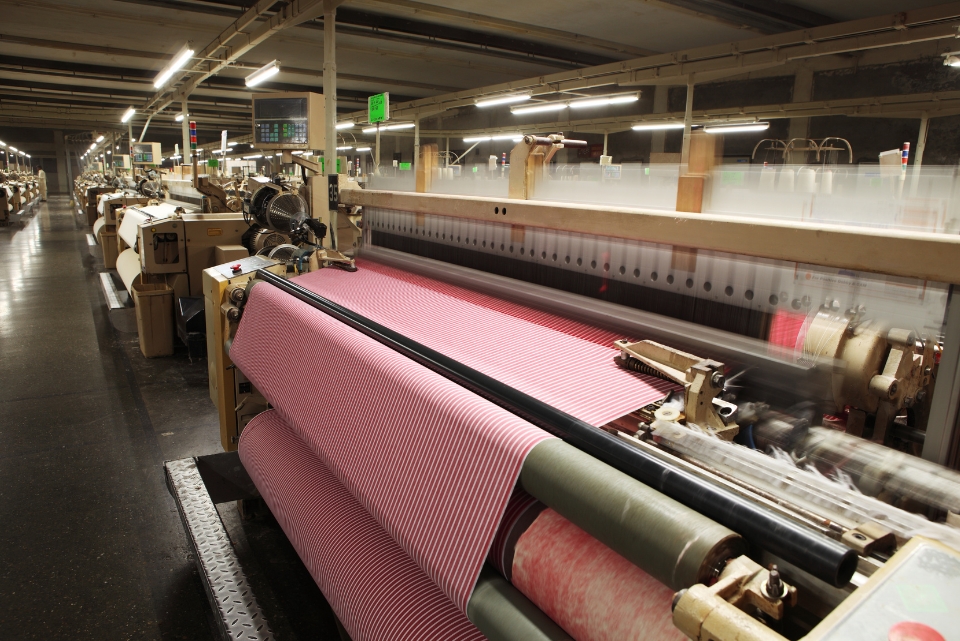
One of the most noticeable benefits of digital transformation is the ability to monitor productivity by sewing line, production stage, and work shift. Regularly updated data helps managers identify processes with excessive waiting times, inefficient workforce allocation, or underperforming equipment.
Instead of waiting until the end of the day to compile reports, businesses can proactively adjust production plans when problems arise, thereby improving output and delivery schedules.
In textile and garment manufacturing, even a minor defect during cutting, sewing, or finishing can affect an entire production batch. By using digital systems to record defects according to product codes, production lines, processing stages, and causes, businesses can identify recurring problems.
Combining this data with root cause analysis and corrective action procedures under ISO 9001 helps businesses prevent recurring defects, reduce rework costs, and minimize product rejections by customers.
Fabrics, sewing threads, accessories, and semi-finished products often account for a significant proportion of production costs. Warehouse management software helps businesses track incoming and outgoing quantities, inventory levels, batch codes, and material usage.
When warehouse data is integrated with production plans, businesses can manage purchasing more proactively, reduce unnecessary inventory, and prevent material shortages from disrupting sewing lines.
Computer-aided design and fabric marker-making solutions can also help optimize fabric consumption, depending on product characteristics and the company's level of investment.
Information traceability is becoming increasingly important in textile and garment supply chains. Customers may require businesses to provide information on raw material origins, production batches, quality inspection results, and delivery dates.
Digitizing records enables businesses to retrieve data more quickly, reduce dependence on paper documents, and improve complaint-handling capabilities. It also provides a foundation for greater transparency in supplier management and product quality control.
When data is consolidated into visual reports, management can monitor important indicators such as:
These indicators enable businesses to evaluate operational performance based on data rather than relying solely on subjective judgments or delayed summary reports.
Businesses with stable processes, transparent data, and effective quality control are often better positioned to work with business partners, particularly customers with rigorous supplier evaluation systems.
Combining digital transformation with ISO 9001 and proper compliance with technical regulations can help businesses strengthen their reputation, reduce production risks, and establish a foundation for market expansion.
Nevertheless, actual results depend on management capabilities, investment levels, data quality, and employees' ability to use the systems effectively.
Businesses do not necessarily need to invest in a large-scale technology system from the outset. Instead, they should assess their current management practices and identify the issues causing the greatest losses.
Initial efforts can focus on digitizing records, managing orders, controlling inventory, and monitoring sewing line productivity. Once data management becomes stable, businesses can gradually implement ERP, MES, or advanced analytics tools.
Digitizing inconsistent processes can cause errors to spread more quickly. Therefore, businesses should review responsibilities, workflows, forms, inspection criteria, and defect-handling methods before incorporating them into software systems.
Proper implementation of ISO 9001 helps businesses standardize operations, clarify responsibilities, and establish effective performance monitoring mechanisms. Technology can then support the implementation, control, and improvement of these processes.
Businesses need to establish product lists, determine corresponding technical requirements, and update relevant technical regulations, standards, and legal provisions.
Regarding QCVN 1:2017/BCT, its scope and legal applicability must be verified before concluding that textile and garment products are subject to its requirements. If a product falls within the scope of another technical regulation, the business must comply with the corresponding provisions.
Consulting specialized advisory organizations or competent conformity assessment bodies can help businesses identify the correct requirements and develop effective implementation plans.
People are a decisive factor in the success of digital transformation. Businesses need to train employees to use software, enter data accurately, and comply with operating procedures.
Management teams should be equipped with knowledge of quality management, data analysis, risk control, and continuous improvement. ISO 9001 awareness training, internal auditor training, and quality management skills programs can help employees understand their roles within the management system.
Before implementation, businesses should establish baseline indicators for comparison after investment. Examples include labor productivity, defect rates, rework rates, order completion times, material loss rates, and operating costs.
Targets should be appropriate to each factory's actual capabilities. Periodic evaluations help businesses determine which solutions are genuinely effective, allowing them to adjust plans and allocate budgets appropriately.
For businesses with limited experience, working with ISO consulting and quality management training organizations can help shorten system development time, minimize errors, and strengthen internal team capabilities.
When selecting partners, businesses should consider their practical experience in manufacturing, implementation methods, expert qualifications, suitability of proposed solutions, and post-training support capabilities.
Digital transformation is creating opportunities for Vietnam's textile and garment industry to improve productivity, strengthen quality control, and enhance competitiveness within global supply chains. However, technology can only deliver meaningful results when implemented on a foundation of clearly defined processes, reliable data, and a capable workforce.
Combining digital transformation with the ISO 9001 quality management system and proper compliance with technical regulations applicable to each product helps businesses manage operations more systematically, reduce waste, and better meet customer requirements.
ISSQ Quality Institute continues to support businesses through ISO training, assessment, and certification activities aimed at improving quality management capabilities, within the scope of its actual services. Businesses should begin by assessing their current situation, defining specific objectives, and developing an appropriate improvement roadmap to gradually achieve sustainable results.
Companies seeking assessment and certification services under QCVN 1:2017/BCT are invited to contact ISSQ Quality Institute via hotline +84 981851111 or email vienchatluong@issq.org.vn | tcvn@issq.org.vn for assistance with the relevant procedures.


