
INSTITUTE FOR STANDARD AND QUALITY DEVELOPMENT STUDIES


ISO/IEC 20000-1:2018 provides an international benchmark framework enabling enterprises to proactively control risks, minimize downtime, and enhance IT service quality. Implementing the standard optimizes costs, standardizes operational processes, and ensures system business continuity. It offers a flexible governance solution for all organizations—from software companies and infrastructure providers to internal IT departments—strengthening credibility and driving competitive advantages in the digital age.
In the era of digital transformation, information technology is no longer merely a support function but has become the operational backbone of most enterprises. From accounting systems, customer relationship management, and e-commerce to supply chain management and customer care, everyday operations depend increasingly on the stability of IT services.
A single disruption—such as server downtime, software failure, data inaccessibility, or delayed support resolution—can cause significant financial loss. Enterprises risk not only revenue loss but also damaged reputations, compromised customer experiences, and operational paralysis across multiple departments.
In this context, ISO/IEC 20000-1 acts as a governance "shield," empowering enterprises to proactively identify and control IT service risks. The standard establishes a unified management framework that enables organizations to deliver stable services, fulfill customer requirements, and continually optimize operational efficiency.
ISO/IEC 20000-1 is an international standard specifying requirements for a Service Management System (SMS). It was created to help organizations establish, implement, maintain, and continually improve their service management operations.
The widely adopted version is ISO/IEC 20000-1:2018. This third edition was published in September 2018 and confirmed by ISO as remaining current following its periodic review in 2023. An amendment regarding climate change action was also issued in 2024.
According to ISO, the requirements of ISO/IEC 20000-1 encompass planning, design, transition, delivery, and service improvement to fulfill specified requirements and deliver value. Therefore, ISO 20000-1 does not merely resolve technical incidents but considers the complete service lifecycle.
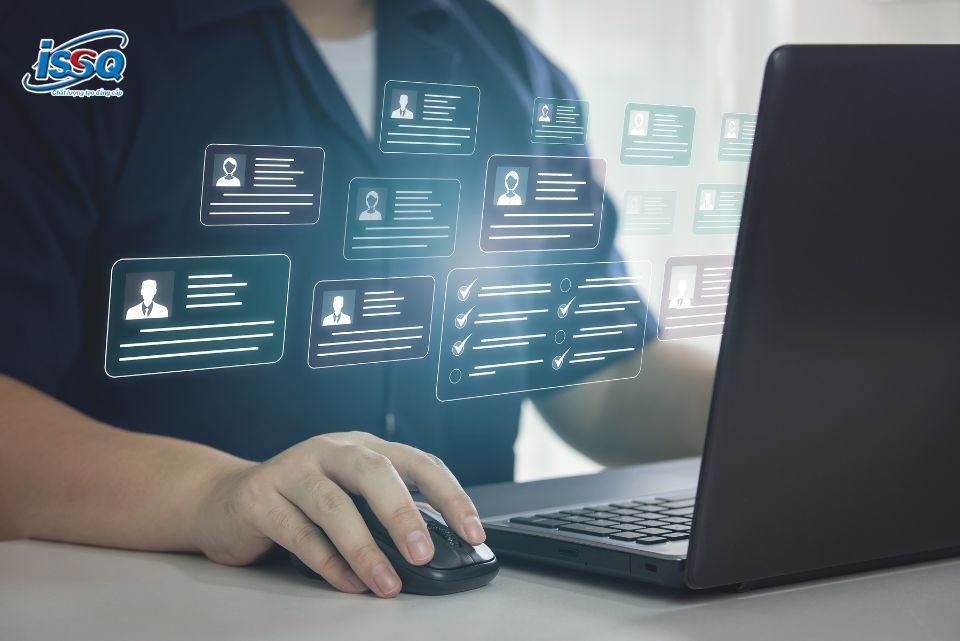
A Service Management System conforming to ISO 20000-1 typically addresses key elements such as:
Service management system planning;
Identifying customer needs and requirements;
Service portfolio and service level management;
Capacity, availability, and service continuity management;
Incident and service request management;
Problem, change, and release management;
Control of suppliers and supply chain participants;
Service performance monitoring, measurement, and evaluation;
Corrective action implementation and continual improvement.
Simply put, ISO 20000-1 enables enterprises to answer key questions systematically: What IT services are being delivered? What do customers expect? Who holds responsibility? How are incidents received and resolved? How are system changes managed? Which key performance indicators measure service effectiveness?
ISO 20000-1 can be implemented independently or integrated with other management frameworks and practices such as ITIL, Agile, DevOps, ISO 9001, and ISO/IEC 27001. While ITIL offers a set of service management practices, ISO 20000-1 defines requirements for organizations to build, operate, and certify a service management system.
The standard does not mandate specific technologies or software platforms. Organizations can tailor the system to match their operational scale, service types, target clients, and risk profile. This flexibility allows ISO 20000-1 to suit large enterprises, small and medium-sized businesses (SMEs), and internal IT departments alike.
It is important to note that ISO 20000-1 cannot completely eliminate every technical failure. Its primary value lies in helping organizations establish systematic mechanisms for prevention, detection, response, and recovery, replacing passive "firefighting" when incidents occur.
Digital transformation in Vietnam is accelerating rapidly across numerous sectors. Enterprises increasingly rely on cloud computing services, enterprise software, digital payment platforms, e-commerce infrastructure, and customer management applications.
When core business activities depend on IT, even a minor technical glitch can cause widespread business interruption. Enterprises therefore require a management framework to maintain service stability, responsiveness, and business continuity. ISO 20000-1 provides the structured governance necessary to meet this need.
Modern customers evaluate organizations not only by product quality but also by service speed and reliability. Frequent application crashes, slow response times, or unresolved support requests can quickly drive customers to competitors.
By establishing Service Level Agreements (SLAs), measurable metrics, and clear departmental responsibilities, ISO 20000-1 helps enterprises maintain transparent service quality control. Customers receive more consistent service, while enterprises gain actionable data to evaluate and refine end-user experiences.
Many organizations still handle incidents based on individual employee experience. When key personnel leave or request volumes spike, service processing becomes delayed, inconsistent, and difficult to trace for accountability.
ISO 20000-1 requires organizations to establish clear procedures, define roles, evaluate risks, and prepare response plans. As a result, operational knowledge transitions from individual dependency into organizational intellectual assets.
An IT service typically involves multiple stakeholders—technical teams, sales, customer support, finance, and third-party vendors. If each department operates in isolation, resolution times lengthen and responsibility shifting becomes common.
ISO 20000-1 clarifies contact points, workflows, prioritization criteria, and communication channels. Standardized cross-functional collaboration minimizes friction, reduces duplicate work, and speeds up issue resolution.
In technology projects, software outsourcing, data center operations, and managed services, enterprise clients frequently demand proof of service management capability. ISO 20000-1 certification serves as objective evidence that an organization operates an internationally aligned management system.
For Vietnamese businesses aspiring to join global supply chains or compete in high-value tenders, applying this standard delivers a distinct competitive edge, reinforces client trust, and presents a highly professional corporate image.
Without measurement data, enterprises struggle to pinpoint root causes of recurring incidents, identify resource-heavy services, or discover non-value-adding activities. Consequently, IT expenditures rise without a corresponding increase in service quality.
ISO 20000-1 encourages organizations to monitor performance, analyze root causes, and drive evidence-based improvements. This enables enterprises to prioritize resources for high-impact activities, eliminate waste, and limit overhead costs caused by unexpected downtime.
Enterprises can systematically identify service risks, evaluate potential business impacts, and implement appropriate control measures. Instead of reacting passively to technical issues, organizations transition toward proactive management.
Incidents can be categorized by priority, resolution window, and business impact. Recurring issues undergo root-cause analysis for corrective action, helping prevent similar disruptions in the future.
With clearly defined service requirements, workflows, and performance indicators, service delivery becomes consistent. Organizations can track response times, restoration speeds, availability rates, and client satisfaction to make data-driven improvement decisions.
ISO 20000-1 also strengthens change and release management. IT system changes are evaluated, tested, approved, and deployed in a controlled manner, reducing unforeseen post-implementation bugs.
Clients benefit from stable service delivery, clear response timelines, and transparent support mechanisms. Publishing formal service levels helps align expectations between providers and clients, preventing misunderstandings regarding scope and obligations.
Consistent quality helps retain existing clients, deepen business partnerships, and establish a dependable foundation for launching new service offerings.
Standardized processes reduce duplicated tasks, decrease reliance on individual staff members, and optimize resource utilization. Data generated by the Service Management System gives executive leadership clear visibility into operational inefficiencies or areas requiring capital investment.
Fewer service outages, shorter downtime durations, and better change controls help protect corporate revenue, workforce productivity, and brand reputation.
ISO 20000-1 requires organizations to establish objectives, track key performance results, perform internal audits, and conduct management reviews. This aligns IT service management directly with overall corporate strategy rather than isolating it as an isolated technical department.
A structured continual improvement loop helps management systems adapt seamlessly to emerging technologies, changing customer demands, and evolving market conditions.
An ISO 20000-1 certificate issued by an accredited certification body provides verifiable proof of an organization's service management capabilities. This offers a distinct advantage when pitching to enterprise clients, participating in public tenders, or expanding into international markets.
However, certification should not be viewed merely as a one-off goal. Sustainable value emerges when the management system is genuinely embedded into daily operations to drive measurable improvements.
ISO 20000-1 applies to any organization or department managing and delivering IT services to internal or external clients, regardless of size, industry, or ownership structure. Ideal candidates include:
Managed Service Providers (MSPs), software-as-a-service (SaaS) vendors, and cloud service providers;
Data centers, network operators, and IT infrastructure providers;
Software outsourcing firms, technical support units, and system operations contractors;
Banks, insurance companies, financial institutions, and e-commerce platforms;
Telecommunications companies, logistics providers, manufacturers, and retailers;
Government agencies, hospitals, universities, and public sector bodies;
Internal IT departments within corporations or group enterprises;
IT outsourcing vendors and third-party IT service managers.
Enterprises do not need to apply the standard across their entire organization immediately. Depending on available resources, an organization can begin with a targeted scope—such as a single service line, a specific department, one operations center, or a designated client group. Once established, the implementation scope can be expanded gradually.

ISO 20000-1 is far more than a technical manual for IT departments. It is an executive management tool that bridges IT service delivery with overarching business objectives, controls operational risks, elevates customer satisfaction, and maximizes resource efficiency.
For Vietnamese enterprises navigating digital transformation or providing technology services, implementing ISO 20000-1 creates a resilient safeguard against service disruptions. More importantly, it helps organizations build a systematic, transparent, and continuously improving management foundation.
In a market where service quality and responsiveness increasingly dictate corporate competitiveness, investing in ISO 20000-1 is an investment in stability, credibility, and long-term sustainable growth.
If your company requires assistance with ISO 20000-1 assessment and certification procedures, please contact ISSQ Quality Institute via hotline: |+84 981851111 or email: vienchatluong@issq.org.vn | tcvn@issq.org.vn for procedural support.


