
INSTITUTE FOR STANDARD AND QUALITY DEVELOPMENT STUDIES


30/10/2026
In the context of international economic integration, Vietnam's food industry is experiencing numerous development opportunities while also facing significant challenges. Consumers are increasingly concerned about product quality, origin, and safety, while distribution partners and export markets continue to raise their requirements for enterprise management systems.
Today's food supply chain involves not only production and processing but also raw material sourcing areas, suppliers, transportation, cold storage facilities, distribution systems, and retailers. A disruption at any stage can affect product quality, delivery schedules, and the reputation of the entire business.
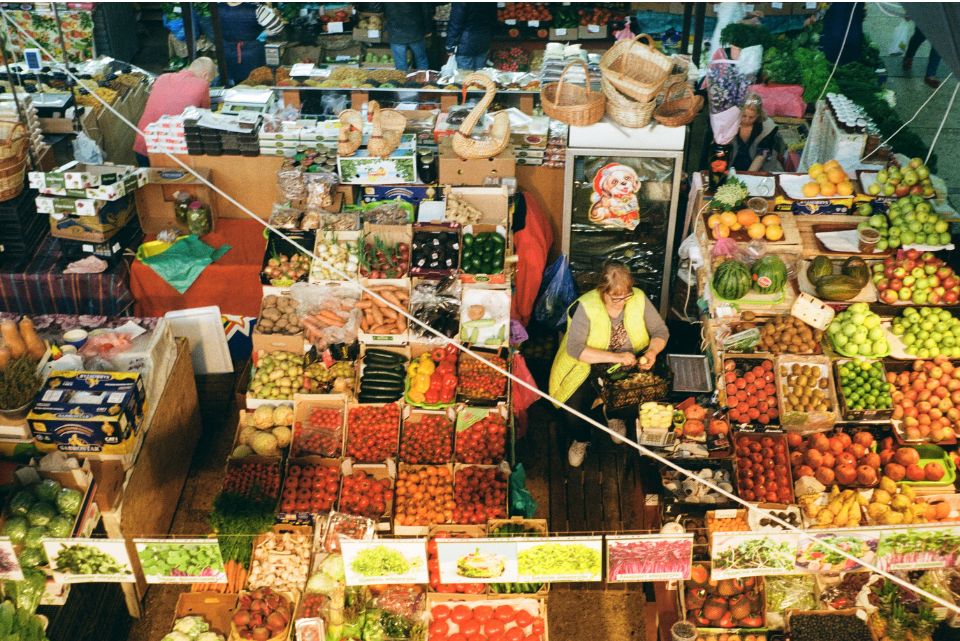
First, food safety risks remain a significant concern.
Unstable raw material supplies, inappropriate storage conditions, cross-contamination risks during production, and inadequate supplier controls can increase food quality and safety risks. For businesses processing meat, seafood, dairy products, beverages, and packaged foods, controlling biological, chemical, and physical hazards is particularly important.
Second, supply chains are vulnerable to unexpected disruptions.
Natural disasters, flooding, disease outbreaks, power failures, refrigeration equipment breakdowns, raw material shortages, transportation disruptions, and information technology failures can all interrupt production and distribution activities.
For fresh foods and products requiring refrigerated storage, prolonged power outages or transportation interruptions may cause products to fall outside required storage conditions. Businesses may suffer financial losses and may also need to recall products, handle complaints, and face the risk of losing customers.
Third, risk management in some enterprises still lacks a systematic approach.
Many businesses have established quality control and food safety procedures but have not simultaneously developed comprehensive response plans for operational disruptions. Contingency arrangements for suppliers, storage facilities, power supplies, personnel, transportation, and information technology are sometimes not integrated into a unified management mechanism.
As a result, businesses may manage operations effectively under normal conditions but experience difficulties when unexpected situations arise.
Fourth, pressure to meet customer and export market requirements is increasing.
Modern retail systems, international food processing companies, and import partners often emphasize traceability, supplier control, incident management, and the ability to maintain stable supplies.
Therefore, businesses must demonstrate not only their ability to ensure food safety but also their capacity to maintain operations when supply chains are disrupted.
Given these challenges, integrating ISO 22000 and ISO 22301 represents an approach worth considering, enabling businesses to combine food safety controls with business continuity management.

ISO 22000 is an international standard for food safety management systems, applicable to organizations directly or indirectly involved in the food chain.
The standard aims to identify, assess, and control food safety hazards throughout the entire process, from incoming raw materials to production, storage, transportation, and distribution.
By implementing ISO 22000, businesses can establish hazard control procedures, manage hygiene conditions, evaluate suppliers, develop traceability capabilities, and prepare procedures for handling unsafe food products.
For food manufacturing, processing, and trading enterprises, ISO 22000 contributes to establishing a systematic management approach, improving process control, and strengthening customer confidence.
ISO 22301 is an international standard for business continuity management systems. It helps organizations prepare for, respond to, and recover from incidents that disrupt operations.
The standard focuses on business impact analysis, disruption risk assessment, identification of priority activities, development of business continuity strategies, and establishment of appropriate recovery plans.
In the food industry, this system can help businesses prepare for situations such as power outages at cold storage facilities, interruptions in raw material supplies, supplier shutdowns, order management system failures, or the unavailability of major transportation routes.
ISO 22301 does not replace food safety control measures. Instead, it helps businesses plan how to maintain and restore operations under adverse conditions while ensuring that food safety requirements remain a priority during incident response.
ISO 22000 and ISO 22301 address two different but closely related areas.
ISO 22000 focuses on the question: How can food be produced, stored, and distributed safely?
ISO 22301 focuses on the question: How can a business maintain or restore critical operations when disruptions occur?
By combining these two standards, businesses can establish a management approach that emphasizes both the prevention of food safety hazards and proactive responses to incidents that may disrupt supply chains.
For example, when a cold storage system fails, ISO 22000 helps businesses assess storage conditions and control risks affecting product safety. Meanwhile, ISO 22301 helps businesses activate contingency plans to transfer goods to backup storage facilities, mobilize alternative resources, assign responsibilities, and restore operations within an appropriate timeframe.
This combination enables management activities to move beyond dealing with consequences toward proactive preparation, coordination, and recovery.
Implementing each standard independently can still create value for businesses. However, when the systems are developed separately, companies may experience duplicated procedures, fragmented resources, and insufficient coordination when handling incidents involving multiple departments.
Reducing Overlapping Management Activities
When implemented separately, businesses may need to develop multiple sets of documents, risk assessment forms, training plans, document control procedures, and internal audit activities.
With an appropriately designed integrated approach, businesses can standardize shared processes such as document management, record control, internal audits, management reviews, employee training, and continual improvement.
However, integration does not mean merging all procedures into one or eliminating the specific requirements of each standard. Specialized activities such as food safety hazard analysis and business impact analysis must still be fully implemented.
Connecting Food Safety Management with Incident Response Planning
One limitation of fragmented management is that business disruption response plans may not fully consider the specific requirements of food products.
For example, when a primary raw material supplier stops delivering, a business must find an alternative source to maintain production. However, the alternative supplier must be appropriately evaluated for quality, food safety, and relevant legal requirements rather than being selected solely based on price or delivery speed.
An integrated management system helps businesses align business continuity decisions with food safety control criteria, reducing the risk of compromising product quality to maintain delivery schedules.
Improving Coordination Between Departments
Food supply chains involve multiple departments, including purchasing, production, quality management, warehousing and logistics, sales, information technology, and senior management.
An integrated management system can clearly define responsibilities, communication mechanisms, and decision-making authority when incidents occur.
This helps businesses minimize delays caused by insufficient information or unclear responsibilities.
Using Resources More Efficiently
Instead of organizing management activities entirely independently, businesses can develop coordinated audit, training, and improvement programs covering both systems.
This approach has the potential to reduce duplicated administrative work, improve record consistency, and help management monitor performance through a unified platform.
Actual savings depend on business size, the maturity of existing management systems, and implementation methods.

Combining food safety management with business continuity planning enables businesses to consider risks not only under normal production conditions but also during unexpected incidents.
Businesses can prepare response plans for situations involving nonconforming raw materials, damaged storage equipment, power supply interruptions, or transportation system failures.
As a result, organizations can strengthen product control, reduce the risk of unsafe food entering the market, and support product recall measures when necessary.
One of the key benefits of an integrated management system is its ability to help businesses identify critical operations and supply chain links that may cause significant disruptions.
Based on business impact analysis, companies can establish lists of alternative suppliers, identify backup resources, prepare alternative transportation arrangements, and establish emergency communication mechanisms.
For businesses dealing with seafood, meat, dairy products, fruits, vegetables, and frozen foods, proactive storage and transportation contingency plans are particularly important for minimizing losses caused by disruptions.
Supply chain incidents can generate various costs, including spoiled raw materials, delayed orders, additional transportation expenses, product recalls, and production interruptions.
An integrated management system helps businesses identify potential risk scenarios in advance, prepare necessary resources, and establish appropriate response procedures.
Although no system can eliminate every incident, effective preparation can shorten response times, limit the extent of disruption, and improve operational recovery capabilities.
In today's business environment, customers are concerned not only about whether products are safe but also about whether suppliers can maintain stable deliveries.
Businesses implementing integrated management systems can demonstrate a structured approach to managing both food safety and disruption risks.
This can provide an advantage when working with retail chains, large-scale food processing companies, and partners in international supply chains.
However, obtaining certification does not automatically mean meeting every customer requirement. Businesses must still comply with applicable contractual obligations, legal requirements, and industry-specific criteria.
For export-oriented food enterprises, food safety control, traceability, supplier management, and the ability to maintain deliveries are essential factors.
ISO 22000 helps businesses establish a systematic food safety management system, while ISO 22301 supports organizational preparedness for situations that may affect supply capabilities.
When effectively implemented, these two systems can help businesses strengthen their organizational credentials, improve management transparency, and provide a foundation for discussions with international customers regarding risk control capabilities.
Integrating the two standards helps businesses shift from responding to incidents after they occur toward identifying risks and preparing in advance.
Employees can receive training on food safety control responsibilities, incident reporting, business continuity, and coordination during emergencies.
Management can also evaluate system effectiveness through audit results, emergency exercises, root cause analysis, and operational performance indicators.
Businesses may monitor indicators such as recovery time, the percentage of critical suppliers with contingency arrangements, incident response time, and corrective action completion rates.
Digital transformation is creating opportunities to improve food management efficiency through traceability systems, warehouse management software, temperature sensors, transportation data, and quality management platforms.
By combining ISO 22000 with ISO 22301, businesses can clearly identify which data must be monitored, which systems should be prioritized for recovery, and which processes must continue during information technology disruptions.
For example, cold storage temperature data can help identify risks affecting product safety, while business continuity plans define appropriate responses when warehouse management software or monitoring systems fail.
As a result, technology serves not only daily management activities but also becomes an important tool for supporting incident response and recovery capabilities.
To ensure that integrating ISO 22000 and ISO 22301 delivers practical results, businesses should follow an implementation roadmap appropriate to their size and operational risk levels.
Management system integration does not automatically mean that a single integrated certification will be issued. The certification scope and audit arrangements depend on the applicable certification scheme.
As food supply chains become increasingly complex, Vietnamese businesses need to adopt management models that ensure product safety while proactively addressing the risk of operational disruptions.
Integrating ISO 22000 and ISO 22301 provides an approach that connects food safety management with business continuity management, improves coordination between departments, supports efficient resource utilization, and strengthens recovery capabilities when incidents occur.
For businesses involved in food production, processing, storage, transportation, and distribution, investing in an appropriate integrated management system can provide an important foundation for improving competitiveness, strengthening customer confidence, and achieving long-term sustainable development.
Businesses should begin by assessing their current situation, identifying critical risks, and developing a suitable implementation roadmap rather than focusing solely on obtaining certification.
When the management system is effectively operated and continuously improved, the value of ISO 22000 and ISO 22301 becomes more evident through improved management performance and stronger food supply chain continuity.
Companies seeking ISO 22000 and ISO 22301 certification audits are invited to contact ISSQ Quality Institute for assistance with the relevant certification procedures.
Hotline: +84 981851111
Email: vienchatluong@issq.org.vn | tcvn@issq.org.vn


