
INSTITUTE FOR STANDARD AND QUALITY DEVELOPMENT STUDIES


05/06/2026
In the context of rapid digital transformation, data and information are increasingly becoming valuable assets for every organization. However, alongside development opportunities come risks such as data breaches, cyberattacks, and information security incidents that can directly impact business operations and organizational reputation.
Therefore, protecting information is no longer solely the responsibility of the IT department but has become an essential requirement in modern business management.
Join ISSQ Quality Institute in exploring why information security is becoming increasingly important and the role of management solutions in protecting business data.
Information security refers to the protection of information and data against unauthorized access, loss, modification, disclosure, or unintended destruction. The objective of information security is to ensure that information is managed and utilized securely to effectively support organizational and business operations.
In practice, information security applies not only to electronic data but also to paper documents, internal records, customer information, trade secrets, and other information assets of an organization.
An effective Information Security Management System typically focuses on three core principles:
For businesses today, protecting critical information assets not only helps minimize risks but also contributes to operational stability, enhances reputation, and builds trust among customers and business partners.

The advancement of digital technology offers numerous opportunities for businesses while also introducing significant information security risks. Organizations and enterprises today face various threats that may directly affect their data, systems, and business operations.
Cyber threats such as malware distribution, phishing attacks, account theft, and unauthorized system access are becoming increasingly common. Not only large corporations but also small and medium-sized enterprises are targeted by cybercriminals due to existing security vulnerabilities.
Many information security incidents originate from within organizations. Improper data sharing, weak passwords, accidental document transmission, or inadequate access control can all lead to the leakage of sensitive information.
Remote working, the use of personal devices, and cloud-based data storage improve workplace flexibility but also increase information security risks. Without appropriate controls, organizations may face data theft or loss.
Information security incidents can cause IT systems to become unavailable, disrupting production activities, service delivery, or customer transactions. Such disruptions not only result in financial losses but also affect operational efficiency.
When data breaches or data losses occur, organizations may experience a decline in customer and partner confidence. In many cases, reputational damage can be more severe and difficult to recover from than direct financial losses.
These threats demonstrate that information security is no longer merely a technical issue but a critical factor closely linked to organizational stability and sustainable development in today’s business environment.
In the digital era, information and data have become valuable assets for many organizations. Protecting information not only minimizes risks but also supports stable operations and enhances market reputation.
It is clear that information security has become an essential requirement for modern businesses. Proactively protecting information not only reduces risks but also creates a solid foundation for sustainable growth.

In response to increasing information security threats, many organizations have adopted ISO 27001 as a structured and systematic framework for establishing and operating an Information Security Management System.
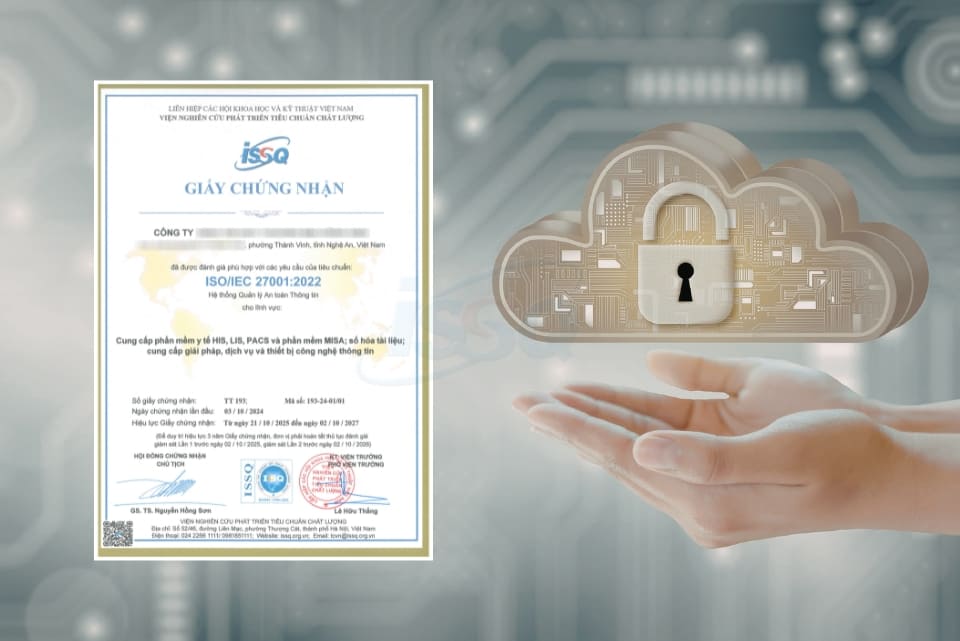
ISO 27001 is an international standard that specifies requirements for an Information Security Management System (ISMS). The standard helps organizations identify, assess, and manage information-related risks in order to protect data and maintain stable operations.
By implementing ISO 27001, organizations can identify critical information assets, assess potential risks, and establish appropriate control measures. The system is also monitored, evaluated, and continually improved to enhance information security management effectiveness.
ISO 27001 is not merely an information security standard but also a valuable management tool that enables organizations to proactively manage risks, protect data, and improve operational effectiveness in today’s digital business environment.
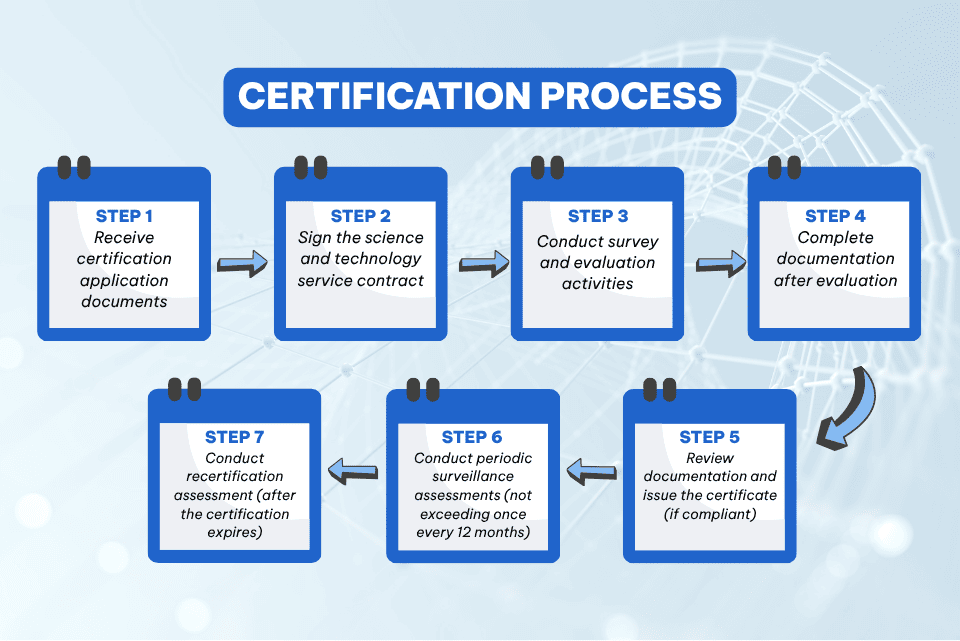
The ISO 27001 certification process generally includes the following steps:
Step 1: Receive the certification application dossier
Step 2: Sign the Science and Technology Service Contract
Step 3: Conduct survey and assessment activities
Step 4: Complete documentation after assessment
Step 5: Review documentation and issue the certificate (if requirements are met)
Step 6: Conduct surveillance audits at intervals not exceeding 12 months
Step 7: Conduct recertification assessment (upon certificate expiration)
As digital transformation continues to accelerate, information security has become one of the most important factors for business operations. Proactively protecting data and managing information-related risks not only helps reduce losses but also enhances reputation and builds trust among customers and business partners.
Implementing ISO 27001 is one of the effective solutions that supports organizations in establishing a systematic Information Security Management System, improving risk prevention capabilities, and driving continual improvement.
Organizations interested in ISO 27001 Information Security Management System certification assessment services may contact ISSQ Quality Institute via hotline (+84) 981 851 111 or email vienchatluong@issq.org.vn | tcvn@issq.org.vn for guidance and support.
Published Date: June 5, 2026


