
INSTITUTE FOR STANDARD AND QUALITY DEVELOPMENT STUDIES


14/06/2026
In today’s increasingly volatile business environment, incidents such as natural disasters, pandemics, supply chain disruptions, technological failures, and cyberattacks can directly impact business operations. Therefore, developing an effective risk management strategy and ensuring business continuity have become essential requirements for many organizations.
Let ISSQ Institute for Quality Studies help you understand the role of ISO 22301 in enterprise risk management strategies and the value it delivers in strengthening resilience against disruptions.
ISO 22301 is an international standard that specifies requirements for establishing, implementing, maintaining, and continually improving a Business Continuity Management System (BCMS). The standard is designed to help organizations protect their business operations against disruptive incidents, reduce the likelihood of risks occurring, and prepare effective response and recovery plans when disruptions arise.
ISO 22301 can be applied to organizations of all types, regardless of size, industry, or organizational structure. Depending on the operating environment and complexity of each organization, the scope and level of system implementation may vary.
Like other management systems, a Business Continuity Management System (BCMS) based on ISO 22301 is built upon the following key components:
The implementation of a structured management system enables organizations to improve their ability to respond to disruptions and maintain stable operations during adverse situations.

Today, not only large corporations but also small and medium-sized enterprises can be affected by unexpected incidents that interrupt operations and result in significant losses.
When organizations lack adequate preparation and response measures, disruptive incidents may lead to:
It is evident that operational disruptions and business risks are challenges that any organization may encounter. Therefore, establishing preventive measures, response plans, and recovery strategies has become a critical aspect of modern business management.

ISO 22301 helps organizations establish a Business Continuity Management System (BCMS), enabling them to proactively identify risks, prepare response plans, and improve recovery capabilities when incidents occur.
ISO 22301 helps organizations determine critical activities, processes, and resources that must be prioritized for protection to maintain business operations.
The standard assists organizations in identifying potential threats, assessing their impacts, and prioritizing appropriate control measures.
ISO 22301 supports the development of response and recovery strategies to minimize the impact of disruptive incidents.
Organizations can improve response capabilities, shorten recovery times, and reduce losses after incidents through the implementation of ISO 22301.
ISO 22301 promotes regular reviews, updates, and improvements of the management system to adapt to emerging risks and changing circumstances.
As a result, ISO 22301 not only supports effective risk management but also contributes to business continuity and sustainable organizational development.

Implementing ISO 22301 not only enhances an organization’s ability to respond to disruptions but also provides numerous benefits in management, business operations, and sustainable growth.
ISO 22301 is an effective tool for improving risk management capabilities, maintaining operational stability, and strengthening sustainable growth in an increasingly uncertain business environment.

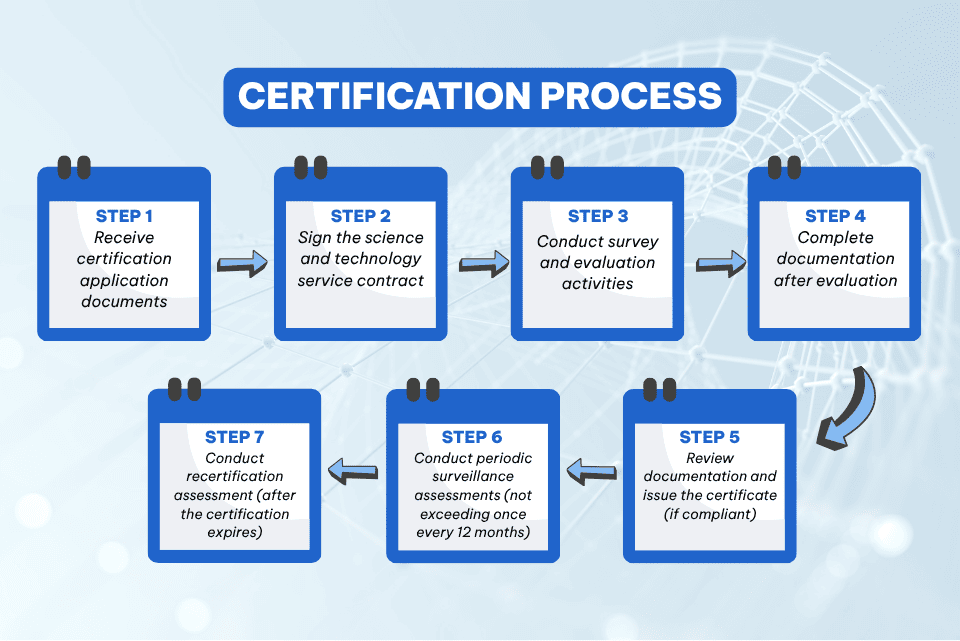
To obtain ISO 22301 certification, organizations typically undergo the following assessment process:
Step 1: Receive the certification application dossier
Step 2: Sign a scientific and technological service contract
Step 3: Conduct surveys and assessments
Step 4: Complete post-assessment documentation
Step 5: Review the dossier and issue the certificate (if compliant)
Step 6: Conduct surveillance audits at intervals not exceeding 12 months
Step 7: Conduct recertification assessments (upon certificate expiration)
Implementing and obtaining ISO 22301 certification helps organizations enhance management capabilities, strengthen resilience against disruptions, build trust with customers and partners, and establish a solid foundation for long-term stable and sustainable development.
Organizations seeking ISO 22301 Business Continuity Management System certification services are invited to contact ISSQ Institute for Quality Studies via hotline: (+84) 981 851 111 or email: vienchatluong@issq.org.vn | tcvn@issq.org.vn for guidance and support.
Publication Date: June 14, 2026


