
INSTITUTE FOR STANDARD AND QUALITY DEVELOPMENT STUDIES


Lighting poles are widely used in urban lighting systems, transportation infrastructure, and many public works today. Certification of lighting poles in accordance with BS EN 40-5:2002 is currently receiving significant attention from businesses aiming to improve product quality in compliance with technical requirements and enhance market credibility.
Lighting poles are widely used in urban lighting systems, transportation infrastructure, and many public works today. During operation, these products are required to meet requirements related to structural durability, load-bearing capacity, and safety against environmental impacts.
Therefore, many manufacturers and suppliers of lighting poles are increasingly interested in evaluating product quality according to appropriate technical standards in order to improve safety, quality, and market reputation.
Let’s explore certification of lighting poles in accordance with BS EN 40-5:2002 together with the ISSQ Quality Institute in the article below.
Lighting poles are structures used for installing and supporting outdoor lighting equipment such as street lights, park lights, urban area lights, or public lighting systems. They are commonly used in transportation infrastructure, residential areas, industrial parks, and various public projects today.
Depending on the intended application, lighting poles may be designed in different styles, heights, and structures such as tapered round poles, octagonal poles, single-arm poles, double-arm poles, or decorative lighting poles.
Typically, lighting poles are manufactured from steel to ensure load-bearing capacity, mechanical durability, and stable operation under outdoor environmental conditions. During use, the products are exposed to wind loads, vibrations, mechanical impacts, as well as corrosion and weather conditions.
For this reason, controlling the quality of lighting poles in accordance with suitable technical standards is a matter of concern for many businesses to ensure product safety, durability, and operational efficiency.
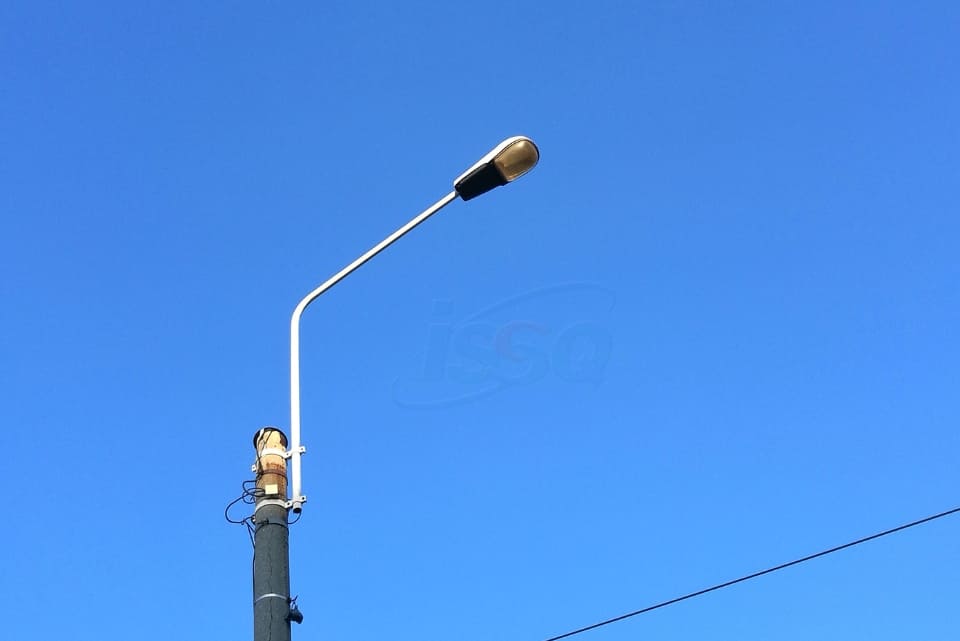
Lighting poles are products used outdoors for long periods, meaning they are continuously affected by environmental conditions, loads, and mechanical impacts during operation. If product quality is not properly controlled, many issues may arise that affect safety and service life.
Some concerns currently attracting attention from businesses and project investors include:
Therefore, certification of lighting poles in accordance with BS EN 40-5:2002 is receiving increasing attention from businesses seeking to improve product quality in compliance with technical regulations and enhance market reliability.
BS EN 40-5:2002 is a European Standard specifying requirements for steel lighting poles. The standard includes requirements related to materials and conformity control. It applies to top-mounted lighting poles with heights not exceeding 20 meters and bracket-arm poles with heights not exceeding 18 meters for side-mounted luminaires.
In addition, the standard also specifies characteristics related to essential requirements concerning resistance to horizontal loads (wind loads) and performance in the event of vehicle collisions (passive safety).
Currently, BS EN 40-5:2002 is of significant interest to businesses involved in the manufacturing, supply, and quality evaluation of lighting poles in order to improve safety, quality, and compliance with technical requirements for construction projects.
Certification of lighting poles in accordance with BS EN 40-5:2002 not only supports businesses in controlling product quality but also contributes to improving safety and competitiveness in both domestic and international markets.
Certification of lighting poles in accordance with BS EN 40-5:2002 not only supports businesses in controlling product quality and safety but also enhances reputation and market competitiveness. Applying suitable standards also enables businesses to become more proactive in manufacturing, supplying, and meeting technical requirements for modern construction projects.
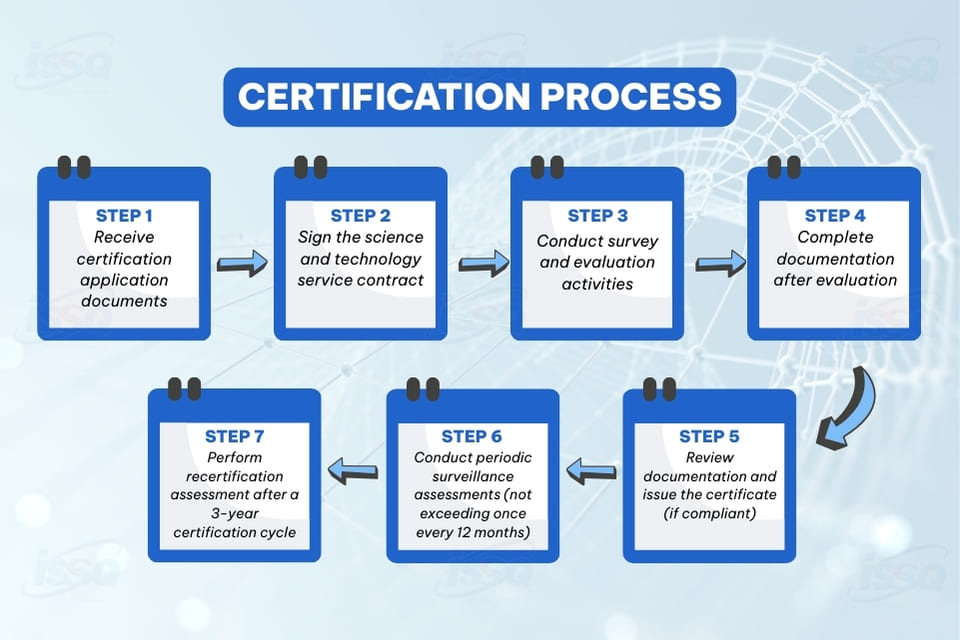
To support businesses in product quality control and conformity assessment according to BS EN 40-5:2002, the certification process is generally carried out through the following basic steps:
Step 1: Receive certification registration documents
Step 2: Sign scientific and technological service contract
Step 3: Conduct surveys and assessments
Step 4: Complete post-assessment documentation
Step 5: Review documentation and issue certification (if compliant)
Step 6: Conduct surveillance assessments at intervals not exceeding 12 months
Step 7: Conduct recertification assessments (certificate validity expires after 3 years)
Lighting poles are products with high requirements regarding structural durability, load-bearing capacity, and safety during outdoor use. Assessment and certification in accordance with BS EN 40-5:2002 not only support businesses in controlling product quality but also contribute to improving reputation, competitiveness, and reliability among customers and project investors.
Through the application of suitable technical requirements, businesses can gradually standardize the design, manufacturing, and supply processes of lighting poles to better meet current market demands.
Organizations wishing to obtain certification of lighting poles in accordance with BS EN 40-5:2002 may contact the ISSQ Quality Institute via hotline: (+84) 981851111 or email: vienchatluong@issq.org.vn | tcvn@issq.org.vn for support with procedures.
Published Date: 25/05/2026


