
INSTITUTE FOR STANDARD AND QUALITY DEVELOPMENT STUDIES


10/04/2024
Food safety plays the most important role in protecting human health and preventing diseases. However, food hygiene and safety issues have become increasingly complex, causing harm to consumers' health and damaging the reputation of businesses.
To help control this situation, on September 25, 2020, the Codex Alimentarius Commission adopted the General Principles of Food Hygiene. HACCP CODEX (CXC 1-1969), Rev. 2020 is the latest CODEX version currently applied worldwide.
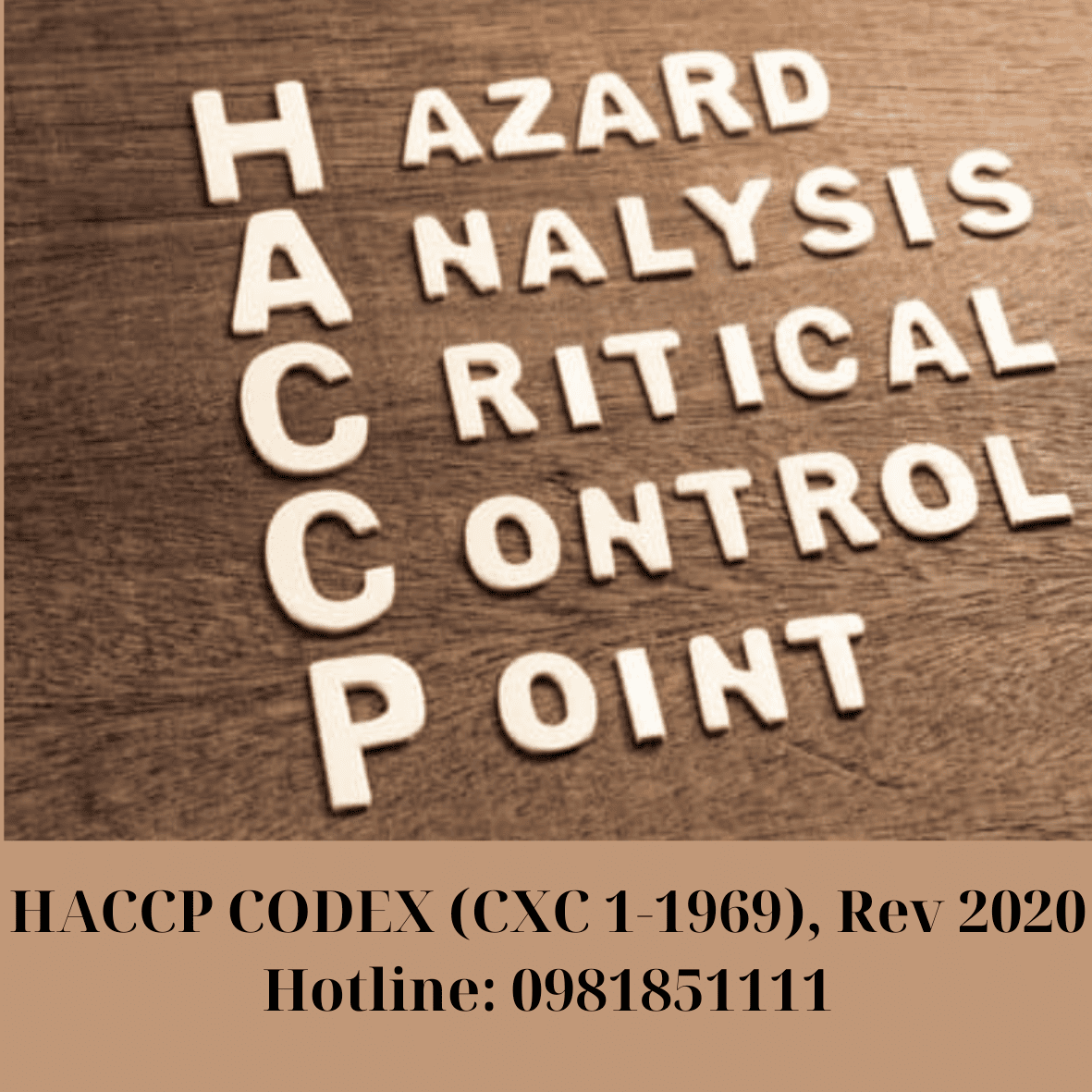
HACCP stands for Hazard Analysis and Critical Control Points, a system that helps enterprises and organizations control and limit hazards that may arise during food production, processing, and distribution.
Food suitability and safety should be controlled through scientifically based preventive approaches, ensuring that food is produced and handled in environments that minimize the presence of contaminants.
In addition to the general principles above, organizations implementing a Hazard Analysis and Critical Control Point (HACCP) system in accordance with the HACCP Standard should ensure compliance with the following seven principles:
Principle 1: Conduct a hazard analysis and identify control measures that may be required during food production processes.
Principle 2: Determine Critical Control Points (CCPs), which are stages in the food production process where controls can be applied to prevent or minimize hazards.
Principle 3: Establish critical limits and define safety criteria.
Principle 4: Establish a monitoring system for controlling Critical Control Points to maintain process stability.
Principle 5: Establish corrective actions to be taken when monitoring indicates a deviation from established critical limits.
Principle 6: Validate the HACCP plan and establish verification procedures to confirm that the HACCP system is functioning as intended.
Principle 7: Establish a record-keeping and documentation system. Maintain records covering all components of the HACCP system, including hazard identification, CCP determination, control measures, and corrective actions.
ISSQ Institute of Quality is always ready to accompany enterprises during the process of integration and development.
Please contact our hotline: (+84) 981 851 111 or email vienchatluong@issq.org.vn | tcvn@issq.org.vn. We are honored to serve our valued customers!
Publication Date: April 10, 2024


