
INSTITUTE FOR STANDARD AND QUALITY DEVELOPMENT STUDIES


04/12/2023
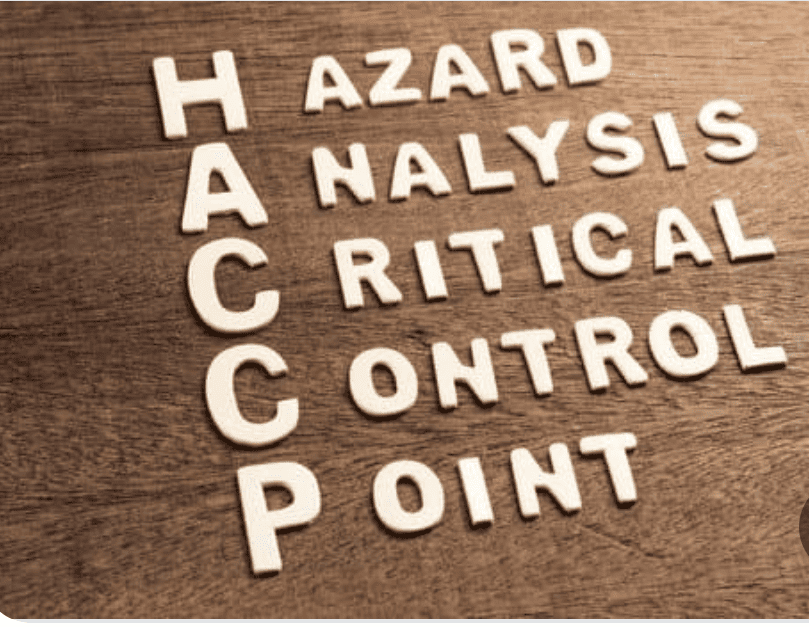
HACCP is a management system for controlling food safety throughout the entire process, from production to products consumed daily. HACCP CODEX (CXC 1-1969), Rev. 2020 is the latest Codex version currently applied worldwide.
The standard was first introduced in conjunction with the United States NASA space program with the objective of minimizing food poisoning and ensuring food safety for astronauts in space during the 1960s.
The standard applies to all organizations and enterprises participating in the food supply chain, including production, processing, packaging, transportation, and food service operations.
The principle of applying the standard within an enterprise is to identify hazards that directly affect or may adversely impact the production process. Based on this, hazards are assessed, and preventive plans, corrective actions, and monitoring measures are established to minimize risks.
The Hazard Analysis and Critical Control Points (HACCP) System is based on seven fundamental principles. These principles form the foundation for establishing and maintaining an effective management system:
Hazard Identification (Hazard Analysis): Assess and identify hazards that may arise during the production process, including all physical, chemical, and biological agents or characteristics. Organizations should also determine the causes of hazards, identify stages in the production process that are most vulnerable to their occurrence, and evaluate which hazards have the greatest impact on product quality.
Identification of Critical Control Points (CCPs): Determine the stages in the production process where control measures can be applied to prevent, eliminate, or reduce hazards to acceptable levels. A single hazard may have multiple CCPs identified by the enterprise.
Establishment of Critical Limits for Each CCP: Define specific standards or requirements (measurable limits such as temperature, time, humidity, etc.) to ensure that each CCP is effectively controlled.
Establishment of a Monitoring System for CCPs: Develop and continuously monitor procedures to ensure that critical control points are implemented correctly. This activity is essential for timely detection of deviations and for implementing corrective actions whenever a loss of control occurs.
Establishment of Corrective Actions: Develop emergency and corrective measures to address issues whenever violations result in food safety incidents.
Establishment of Verification Procedures: Determine verification activities to confirm that the HACCP system is functioning effectively and that food safety is maintained through testing or random inspections of products available on the market.
Establishment of Documentation and Record-Keeping Systems: This includes compiling and maintaining HACCP-related documentation (hazard analysis records, monitoring plans and records, records of nonconformities, etc.), as well as notes and information related to control activities.
These principles ensure that HACCP is developed as a systematic management framework and can operate effectively to meet the specific requirements of different industries and food production enterprises.
Ensuring Food Safety: The standard helps identify, assess, and control potential food-related hazards. As a result, products are manufactured according to controlled processes, ensuring quality and safety for consumers, enhancing the enterprise’s reputation, and attracting customers.
In addition, implementing and obtaining HACCP certification is often considered a competitive advantage when participating in tenders or projects.
According to Article 12 of Decree No. 15/2018/ND-CP detailing the implementation of certain provisions of the Law on Food Safety:
"Facilities that have been granted certification for the Hazard Analysis and Critical Control Points (HACCP) System are exempt from the requirement to obtain a Food Safety Certificate."

Step 1: Receive the certification application dossier
Step 2: Sign the science and technology service contract
Step 3: Conduct on-site surveys and assessments at the enterprise
Step 4: Complete documentation after assessment
Step 5: Review the dossier and issue the certificate (if compliant)
Step 6: Conduct surveillance assessments every 12 months
Step 7: Conduct recertification assessment (certificate validity period: 3 years)
The ISSQ Quality Institute is always ready to accompany enterprises throughout their integration and development journey.
Please contact our hotline: (+84) 981 851 111 or email vienchatluong@issq.org.vn | tcvn@issq.org.vn. We are honored to serve our valued customers.
Publication Date: December 4, 2023


